❋ Grandkid Time ❋
Bedtime Prayers at Grandma's: A Blessing for Every Family
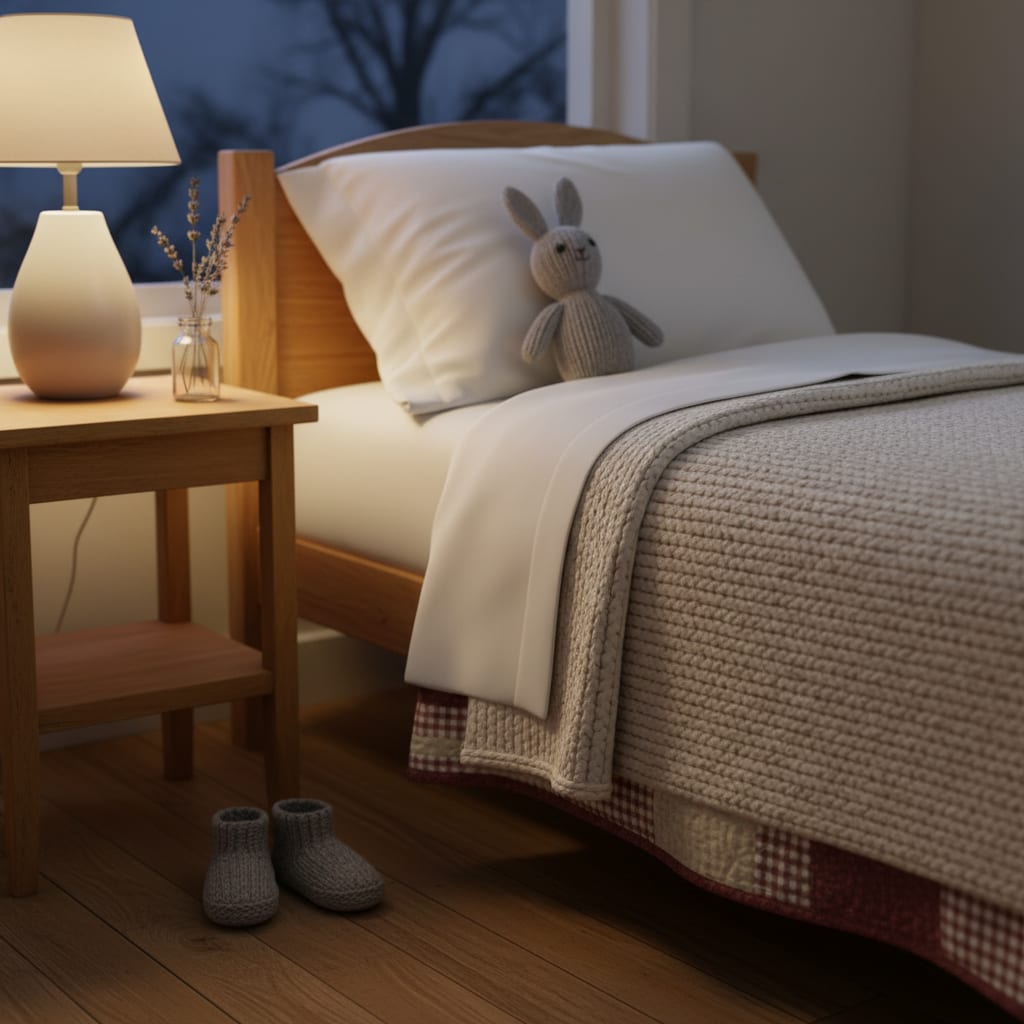
A bedtime prayer or blessing at Grandma’s should be the family’s own, said the family’s way. Ask the parents what their child says at home, where it comes in the routine and who says it, then do exactly that: usually the last quiet minute, after the books, with the light already low. If the family doesn’t pray, a short spoken blessing or a “best thing today” goodnight does the same job. And if your faith differs from the parents’, their words win at bedtime. This is the one minute of the day that should feel exactly like home.
Why the last minute matters
A bedtime routine works because it’s predictable. Nemours KidsHealth says a regular bedtime routine and a quiet, comfortable bedroom help a preschooler sleep well, and suggests a relaxing sequence of bathroom, pajamas, teeth and a book. A prayer or blessing at the end of that sequence becomes a signal: when these words are said, the day is over.
So keep it last and keep it short. Once the words are said, the light goes out and you leave.
Ask the parents before the first sleepover
Ask in daylight, before the overnight bag is packed:
- Does she say anything at bedtime? A prayer, a blessing, a song, a goodnight to everyone in the house?
- What are the exact words? Ask them to text you the words.
- Where does it come in the routine? Before the story, after it, or with the light off?
- Who says it? Some children lead, some repeat after an adult, and some just listen.
- What language? If the family prays in Hebrew, Arabic, Spanish or Tagalog, ask for the words written as they sound. In a bilingual bedtime routine the routine’s order belongs to the parents, and so do these words.
Then ask the question nobody thinks of: “If she asks me to pray with her and you don’t usually, what would you like me to say?”
Prayers families already use
You only need the one your grandchild already knows. These are a few you may meet.
Christian families. “Now I lay me down to sleep” is an 18th-century children’s prayer. The version printed in The New England Primer continues “If I should die before I ‘wake,” and Wikipedia records several later versions that end with angels watching through the night and waking “with the morning light” instead. If the parents use the gentler ending, use theirs. Many Catholic families say the Guardian Angel prayer, “Angel of God, my guardian dear.” Betteroo keeps a collection sorted by a child’s age, from one-line prayers a toddler can repeat to longer ones for older children, with the traditional Catholic and Protestant texts included.
Jewish families. The bedtime Shema is said before sleep. My Jewish Learning prints a short version for young children from the prayer book Siddur Sim Shalom, which begins “Hear, O Israel: the Lord our God, the Lord is One” and ends “God is with me, I shall not fear.” The same page notes that, according to the Talmud, saying the first line alone fulfils the practice, and that this has become a popular way to say it.
Muslim families. Sahih al-Bukhari’s book of invocations records that when the Prophet went to bed he would say Bismika amutu wa ahya, and the same book describes reciting the last two surahs of the Quran before sleep. Ask the parents which their child uses and how they pronounce it.
Families who don’t pray. A blessing doesn’t have to be addressed to anyone. The loving-kindness (metta) practice taught by UC Berkeley’s Greater Good Science Center uses the wish “May you be safe, may you be healthy, may you be happy, may you live with ease”. That works perfectly well said quietly over a four-year-old. So does a plain goodnight round: the best thing today, one thing for tomorrow, and goodnight to everyone in the house, including the dog.
When your faith and theirs are different
This is the hard part, and the answer is short. Bedtime is not the time to introduce your own faith.
If the parents raise the children in a faith you don’t share, learn their words and say them properly. If the parents aren’t raising them in any faith and you are devout, keep your prayer for your grandchild to yourself, after the door is closed. Nobody can object to what a grandmother does in her own chair at nine o’clock. Betteroo has a page of prayers written from the grandparent’s side for exactly that.
What you must not do is slip your own prayer into their child’s bedtime. Four-year-olds report everything, usually at breakfast, word for word, and being trusted with the grandchildren matters more than any prayer you might add. Their baby, their rules, my cookies.
If the grandchild asks you directly (“Grandma, do you pray?”), tell the truth briefly and hand it back: “I do, in my own way. Different people in our family believe different things. You can ask Mom about it too.”
Keeping it to one minute
Prayers stretch. A clever five-year-old learns that “and bless the dog next door, and the mailman” buys three more minutes.
Let her name the people she loves, once round, then say the closing line the parents use and turn off the light. If she adds a new name every night, smile and say, “We’ll put the mailman in tomorrow.”
Sometimes a prayer raises a big question: “Can Grandpa hear me in heaven?” Answer briefly and kindly, using the family’s own beliefs, and leave the long answer for daylight. My guide to bedtime questions about death covers the words to use and when to pass the question to the parents.
 The same last minute, at both houses
Betteroo builds an age-based sleep plan the whole family can follow, so bedtime at Grandma's ends the way it ends at home.
Take the sleep quiz →
Blessing a baby at bedtime
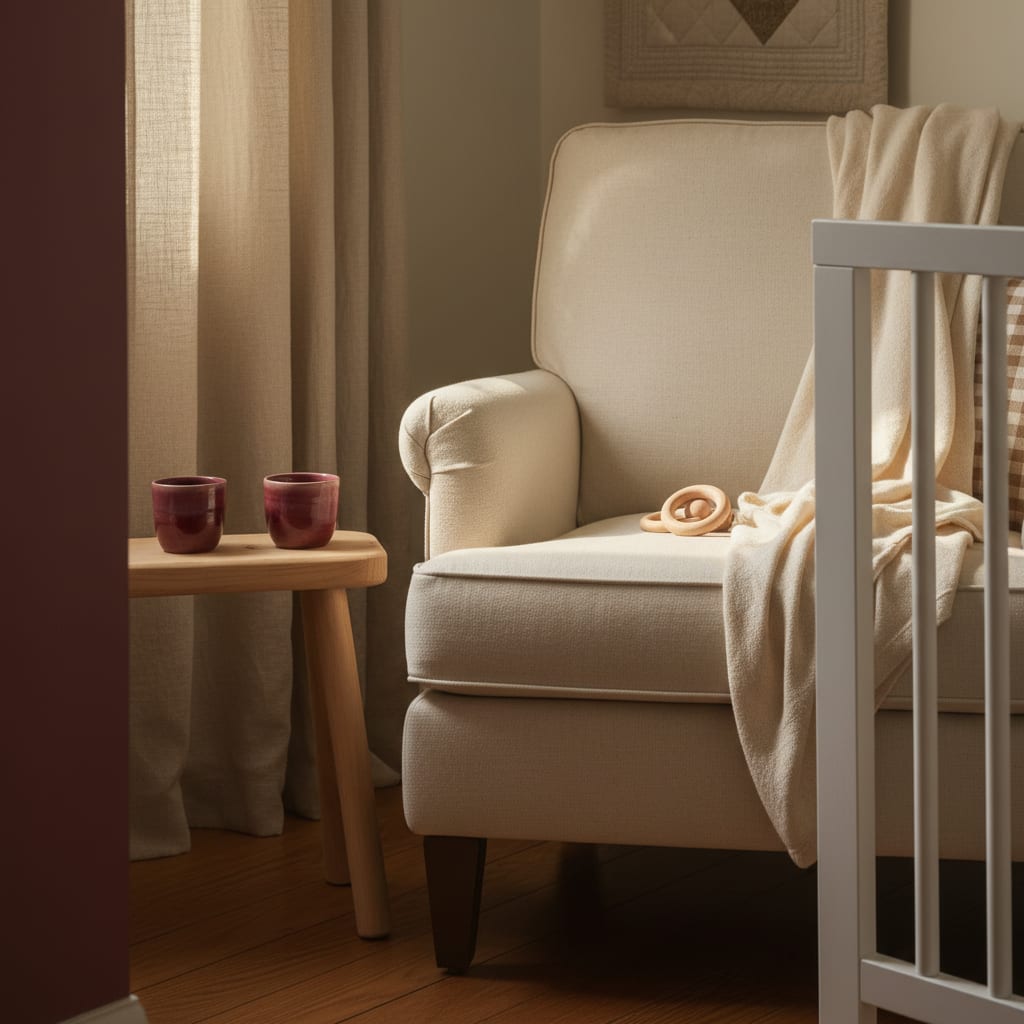
With a baby, say the blessing while you’re holding her, then lay her down. Don’t say it after she’s in the crib if that means leaning in with extras. The NIH Safe to Sleep campaign says the safest sleep surface is firm, flat and level “like a table, not a hammock”, covered only with a fitted sheet, and that a crib with nothing else in it is the safest option. So a rosary, prayer beads, a blessing blanket or a christening shawl belongs on the shelf where she can see it, not in the crib with her.
The same page warns that couches and armchairs are especially dangerous when an adult falls asleep on them while feeding or comforting a baby. A long lullaby or prayer in a soft chair at the end of a tiring day is exactly when that happens. Say it, then put her down.
Make your own blessing
Some families want something of their own, and children who like rhyme enjoy making one. Four lines is plenty. The same short shape I use for grandma poems works for a goodnight verse. Here’s one I wrote that has no particular faith in it:
The day is done, the stars are out, the house is quiet, the dog’s about. Sleep well, small one, warm in your bed. I love you more than all I’ve said.
Give the parents a copy and let them decide whether it travels home.
FAQ: bedtime prayers at Grandma’s
Should I pray with my grandchildren at bedtime?
Only the way their parents do it: the same words, in the same place in the routine. If the family doesn’t pray, use a short blessing or a goodnight round.
What if my grandchild’s parents don’t want prayers at bedtime?
Respect it. Offer a secular goodnight instead, and keep your own prayers for after the door is closed.
What is a good bedtime blessing for a child who isn’t religious?
A short spoken wish works well. The loving-kindness wish taught by the Greater Good Science Center, “May you be safe, may you be healthy, may you be happy, may you live with ease,” can be said by any family.
Can I put a rosary or blessing blanket in the baby’s crib?
No. The NIH Safe to Sleep campaign says a crib with nothing in it but a fitted sheet is the safest option. Keep blessing objects on a shelf nearby.