❋ Grandkid Time ❋
When Grandparents Disagree About Safe Sleep
When grandparents disagree about safe sleep, the disagreement is not settled by seniority, sentiment or family peace — it’s settled by the current guidance, and the answer is the same in every house: baby on the back, alone, on a firm flat surface, in a bare crib. That is the American Academy of Pediatrics line, it is what the parents have been taught, and a grandparent who quietly does otherwise is not being warm. I’m writing this from our side of the table, because I’ve been the grandmother who had to say it to another grandmother, and it is genuinely hard.
Why this comes up between us, not between them
The disagreement almost never starts with the parents. It starts with two grandmothers in a kitchen, one of whom has read the hospital leaflet and one of whom raised four children face-down under crocheted blankets and is faintly insulted by the whole conversation. Add a great-aunt, a husband who thinks it’s all fuss, and a baby who has just fallen asleep in someone’s arms, and you have the classic scene.
Here’s the thing I had to make peace with first. The advice changed because the evidence changed, not because our mothering was judged and found wanting. We followed the best advice available then. Following the best advice available now is the same act of love, not a confession. Say that out loud to the other grandmother — it dissolves more resistance than any statistic, because what she is defending is usually not the quilt. It’s her competence.
The lines that don’t bend
These are not preferences, and they are not up for a family vote:
- On the back, every sleep. Naps and nights, in the first year, at every house. Once a baby rolls independently you don’t have to flip them back over, but they are still put down on the back.
- Not on the side. The side was briefly recommended in the middle era, and it was retired for good reason — a side-lying baby rolls onto the tummy easily. If someone in your family still believes it’s the safe compromise, Betteroo’s plain-English explanation of why side sleeping was dropped from the guidance is the thing to forward, because it says it kindly and it says it clearly.
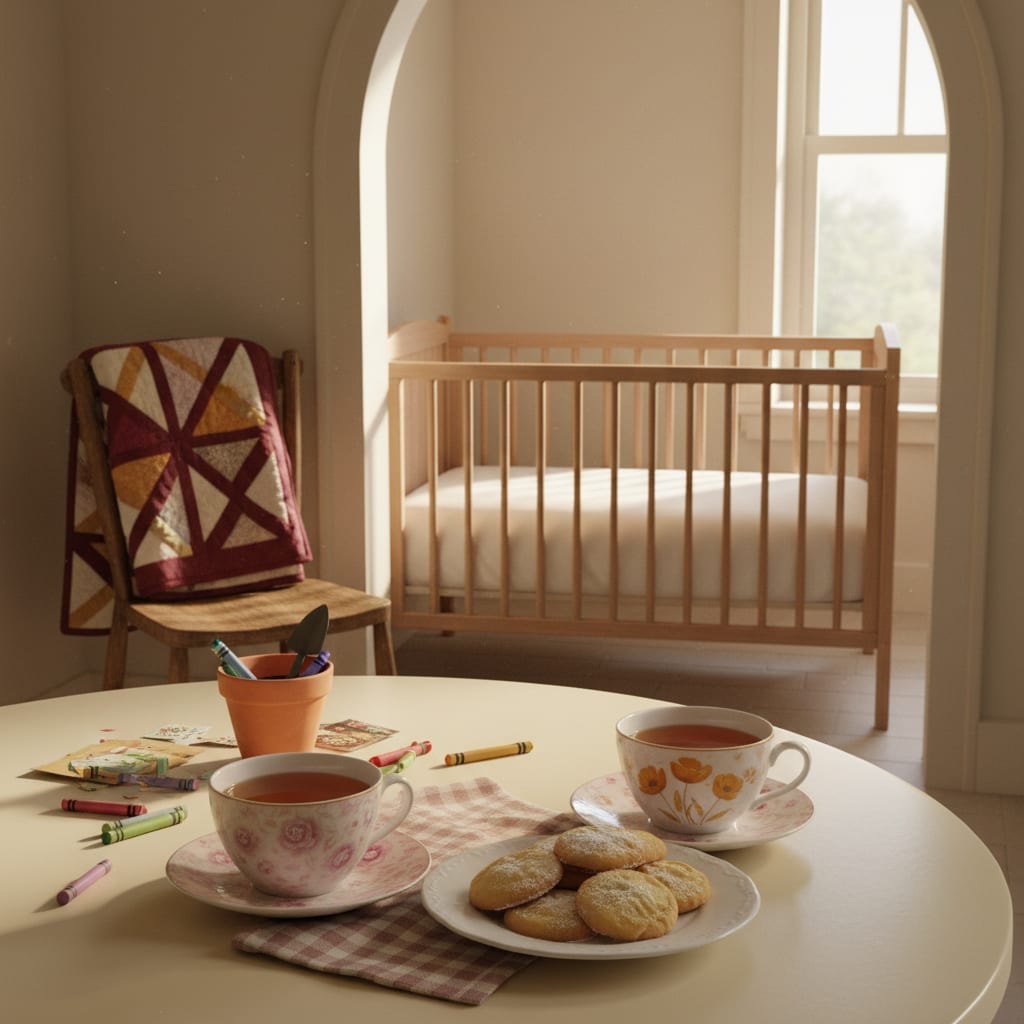
- A bare crib. No bumpers — not even the “breathable” ones. No pillow, no quilt, no loose blanket, no sheepskin, no positioners or wedges, no stuffed animals. A firm mattress and a snug fitted sheet, and that is the entire inventory. Warmth comes from a wearable sleep sack.
- Firm and flat. Not an inclined sleeper — those were recalled and are now banned from sale in the US. Not a car seat, swing, bouncer or nursing pillow for sleep at home. Not a sofa or an armchair, ever, which is the one that catches loving grandparents dozing with a baby on their chest.
- No bed-sharing. Room-sharing, yes — baby in their own crib or bassinet near the adult bed. In an adult bed, no, however soundly you sleep and however carefully you arrange the pillows.
The full modern rulebook, with the reasoning behind each change, is in my safe sleep rules for grandparents post. Send it to whoever needs it rather than arguing from memory.
”We all did it and turned out fine”
This is the sentence, isn’t it. And the kind answer is short: the babies who didn’t turn out fine aren’t at the table to say so. That’s the whole flaw in the reasoning — we’re counting the survivors, in a generation where infant deaths during sleep were far more common than they are now, and where every one of those families also thought it wouldn’t happen to them.
I don’t say it that bluntly to a proud grandmother in her own kitchen. What I say is: “We were doing our best with what they told us. This is what they tell us now, and I’d rather look silly than sorry.” Nobody has ever argued with that.
Words that work, and words that don’t
When you’re the one being asked to change. Say “show me how you want it done” and mean it. Ask the parents to walk you through the crib setup once, in person. It converts a criticism into an instruction, which is much easier for everyone to carry.
When it’s the other grandmother. Don’t correct her in front of the parents — she’ll dig in and you’ll look like you’re scoring points. Catch her privately: “The rules have changed since we did this and it threw me too. Want me to send you what my daughter-in-law gave me?” Handing over the parents’ own material makes you an ally rather than a rival.
When it’s your husband or your sister at the crib. Be direct and unembarrassed. “Not on the tummy — she goes on her back.” Then move the baby yourself and change the subject. Safety instructions don’t need a preamble.
When someone won’t budge. Then the rule is simple and unpleasant: they don’t put the baby down for sleep unsupervised. You don’t need to win the argument, and you certainly don’t need to escalate it to the parents as a family drama — you just quietly hold the sleep duty yourself. And if a genuinely unsafe arrangement is happening in another house, the parents do need to know, calmly and once.
Two things never to do: never override the parents’ instructions because you disagree, and never let a disagreement between grandparents become a thing the parents have to referee. My grandparents overstepping boundaries post is the long version of why that costs you access.
The routine is the other half
Safe sleep is the floor. Above it sits the parents’ actual routine — nap timing, wake windows, bedtime — and that’s where most grandma-day friction really lives, dressed up as a safety argument. When everyone is working from the same written plan, the disagreements mostly evaporate, because there’s nothing left to improvise about.
My daughter runs her baby’s day on a personalized plan she can share straight to my phone — nap windows and bedtime, updated as he grows. Honest grandmother’s verdict: it’s a scheduling tool, not a magic wand, and babies remain entirely their own people. But it ended the “well, I think he looks tired” debate in our family, which was worth the subscription on its own.

If the wider “everything has changed” conversation is the real issue in your family, baby care then vs now covers the rest of it — car seats, feeding, teething — with the same generosity toward the grandmothers we were.
FAQ: safe sleep disagreements between grandparents
What do I say when another grandparent insists tummy sleeping is fine?
Be kind and firm: the advice changed because the evidence changed, and back sleeping is the guidance now, at every house. Offer to forward the parents’ own materials rather than arguing from memory — it makes you an ally instead of an opponent.
Is side sleeping a reasonable compromise?
No. Side sleeping was recommended briefly decades ago and was withdrawn because babies roll from their side onto their tummy too easily. There is no halfway position: back sleeping is the recommendation for every sleep in the first year.
Can I let the baby nap on me in the armchair?
Not asleep, no. Dozing with a baby on a sofa or armchair is one of the highest-risk situations in safe sleep, precisely because it feels so natural. Enjoy the cuddle awake, then move the baby to the crib on their back.
What if the other grandparents ignore the rules at their house?
Tell the parents once, calmly and without drama — it’s their decision to make, not yours to enforce. In your own house, hold the sleep duty yourself rather than negotiating with someone who won’t follow the guidance.
Who has the final say about the baby’s sleep?
The parents, guided by their pediatrician. Grandparents on both sides follow their instructions, and a pediatrician’s specific advice for a specific baby always outranks anything either grandmother remembers from her own babies.