❋ Grandkid Time ❋
A Sleep Plan for a Week at Grandma's House
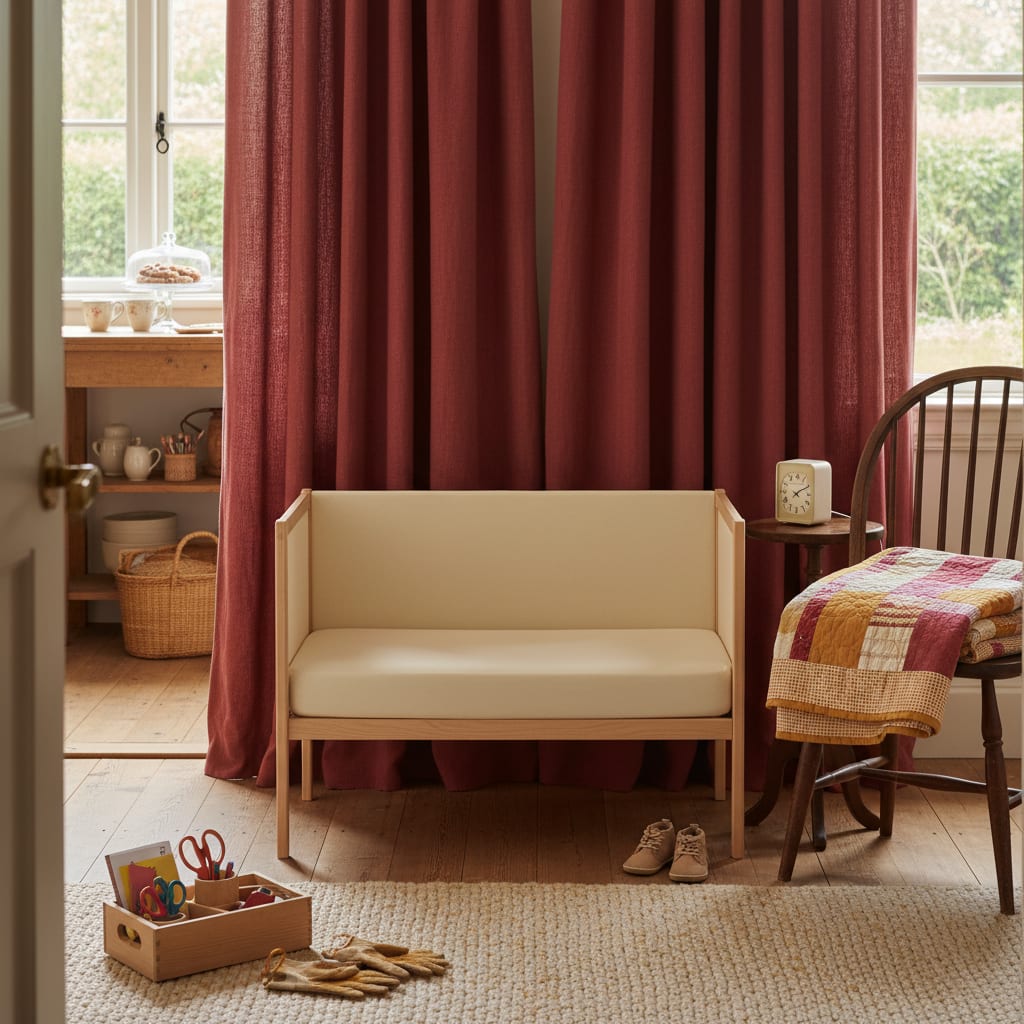
A week at grandma’s house survives on one decision made before anybody arrives: whose plan are we running? Agree with the parents, in writing, what the naps and bedtimes are — then run their plan, not yours, for seven days. That single agreement prevents almost every argument a long stay produces. Expect night one to be poor, night two to be worse, and things to settle from about night three. What follows is the week as it actually goes, what to fix on each day, and how to hand the child back in a state that gets you invited again next summer.
Before they come: the ten-minute conversation
Ask for it as a favour and it takes ten minutes on a call.
- The times. Nap start, nap length, bedtime, and the time they’d want a nap capped so the night isn’t wrecked.
- The routine, in order. Bath, pyjamas, two books, song, lights out — whatever it is, get the sequence, not the vibe.
- The words. The exact goodnight phrase. Small children run on liturgy.
- The rules that aren’t negotiable. Back to sleep, empty crib, room temperature, what the child sleeps in.
- What happens at 2am. Do they go in? Do they wait? What do they say? Getting this one wrong at three in the morning on night two is how a week goes sideways.
- What they’re relaxed about. Ask this explicitly. Most parents will hand you one or two things — a late night on the Saturday, an extra story — and knowing which ones are gifts stops you guessing.
Write it on a card and stick it inside a kitchen cupboard door. The setup side of this — travel crib, dark room, white noise, where everybody sleeps — I’ve covered in full in baby sleep at grandma’s house, and it’s worth doing the day before they arrive rather than while a tired toddler watches.
Day one: expect a bad night and don’t fix it
New room, new smells, new noises, and a small person who has been in a car. Night one is nearly always rough. Nothing is wrong, nothing needs solving, and the worst thing you can do is invent a new method at eleven o’clock.
Do this instead: run the routine early rather than late, keep the room properly dark, and be boring. Boring is the entire strategy. If they wake, do the least you can get away with — hand on the back before picking up, picking up before feeding, feeding before bringing them into your bed.
And don’t announce the bad night at breakfast in front of the parents like a weather report. “She woke a couple of times, all fine” is both true and kind.
Days two and three: hold the line on naps
The nap is what makes or breaks a week away, and it’s the first thing a holiday destroys. A skipped nap on Tuesday is a 4.45am wake-up on Wednesday and a child who cannot be reasoned with by Thursday.
Two protections:
Protect one proper nap a day at home. In the crib, in the dark, at roughly the right time. Plan the outing around it, not the nap around the outing. A pram nap or a car nap is real sleep and perfectly fine when the day demands it, but a whole week of them adds up to a short-changed child.
Watch the gaps, not the clock. How long a baby can comfortably stay awake between sleeps changes fast in the first two years, and a week at grandma’s is exactly when a stale mental timetable gets you in trouble. If the parents have handed you a nine-month-old, Betteroo’s page on how long a nine-month-old can comfortably stay awake is the single most useful thing to read before the visit — it’s the number that decides whether bedtime is peaceful or a fight.
By night three most children have accepted the room. If yours hasn’t, change one thing — usually the darkness, occasionally the temperature — rather than four.
Midweek: the two problems that actually show up
The 5am wake-up. Nearly always light, noise, or a nap that finished too late in the day. Fix the blackout first; you can tape a bin bag over a stubborn window and nobody will judge you.
The bedtime that goes from twenty minutes to ninety. This is the sound of a child discovering that grandma will keep coming back. Return to the parents’ routine exactly, do it in the same order, and be dull about it. Consistency is what shortens it, not firmness.
If the parents are staying too and a sleep problem is clearly bigger than the visit — the sort where they’re already exhausted before they got in the car — that’s a conversation for the drive home, not the landing at midnight. Some families now arrive with a written plan built around the child’s age and temperament rather than improvising, which quietly solves the grandparent problem: a plan the whole household can follow means I’m following sheet music instead of guessing, and no one has to relitigate bedtime in my hallway.

The toddler version of the same week
Over about eighteen months the problem changes shape. It stops being about the room and starts being about negotiation — the fourth glass of water, the sudden fear of the hallway, the “I don’t sleep in the daytime at MY house” gambit, which is a lie roughly ninety per cent of the time.
Two additions handle it. Give the choices you don’t mind losing — this pyjamas or that, this book or that — so the child spends their autonomy on things you’re happy with. And put the boundary in the routine rather than in your voice: “two books, then lights” said at the start, not “just one more” negotiated at the end. A week with an older grandchild is essentially a long sleepover, and my sleepover at grandma’s house checklist runs the same schedule-first rule.
Friday: hand them back better than you got them
The last two days are where a grandmother earns next summer.
- Tighten rather than loosen. No big late night on the final evening. Send them home rested and the parents’ week doesn’t start in a hole.
- Write down what actually happened. Not a diary — three lines. Naps roughly when, nights roughly how, anything new.
- Warn them about the reset. Two or three unsettled nights back home is normal after a week away, and a parent who’s been warned doesn’t panic and start changing things.
- Send the crib home clean and the sheets washed. It’s a small thing and it lands.
- Say the true sentence. “She did brilliantly, and we ran your routine.” That is the sentence that gets you the next week.
If anything about the rules felt strange to you this week — and something usually does, because the guidance genuinely moved since we were doing this — the current version is laid out plainly in safe sleep rules for grandparents. Most of it turns out to be simpler than what we were told, not fussier.
FAQ: a week at the grandparents’ house
How long does it take a baby to settle at grandma’s house?
Usually two to three nights. Night one is often the worst, night two can be worse still, and most babies have accepted the room by the third or fourth night — which is precisely why a week works better than a weekend.
Should I keep the parents’ nap schedule on holiday?
Yes, as closely as the week allows. Bedtime and one protected nap in a proper sleep space are the two to defend; everything else can flex around outings without much cost.
What do I do if the baby only sleeps in my arms all week?
Hold them and enjoy it, but keep offering the crib first at every sleep so the habit doesn’t set in for the parents to undo later. Tell the parents honestly what happened rather than presenting a tidier version.
Is it worth bringing anything from their own bedroom?
Very much so. Their own sheet, sleep sack and comfort object carry the smell of home, and they do more for a child in a strange room than any amount of new equipment.
How do I handle the going-home adjustment?
Warn the parents to expect two or three ropey nights, tell them not to change anything in response, and resist the urge to feel responsible. Children re-settle at home faster than they settled at yours.