❋ Grandkid Time ❋
When Baby Only Naps in Motion: A Grandma's Guide
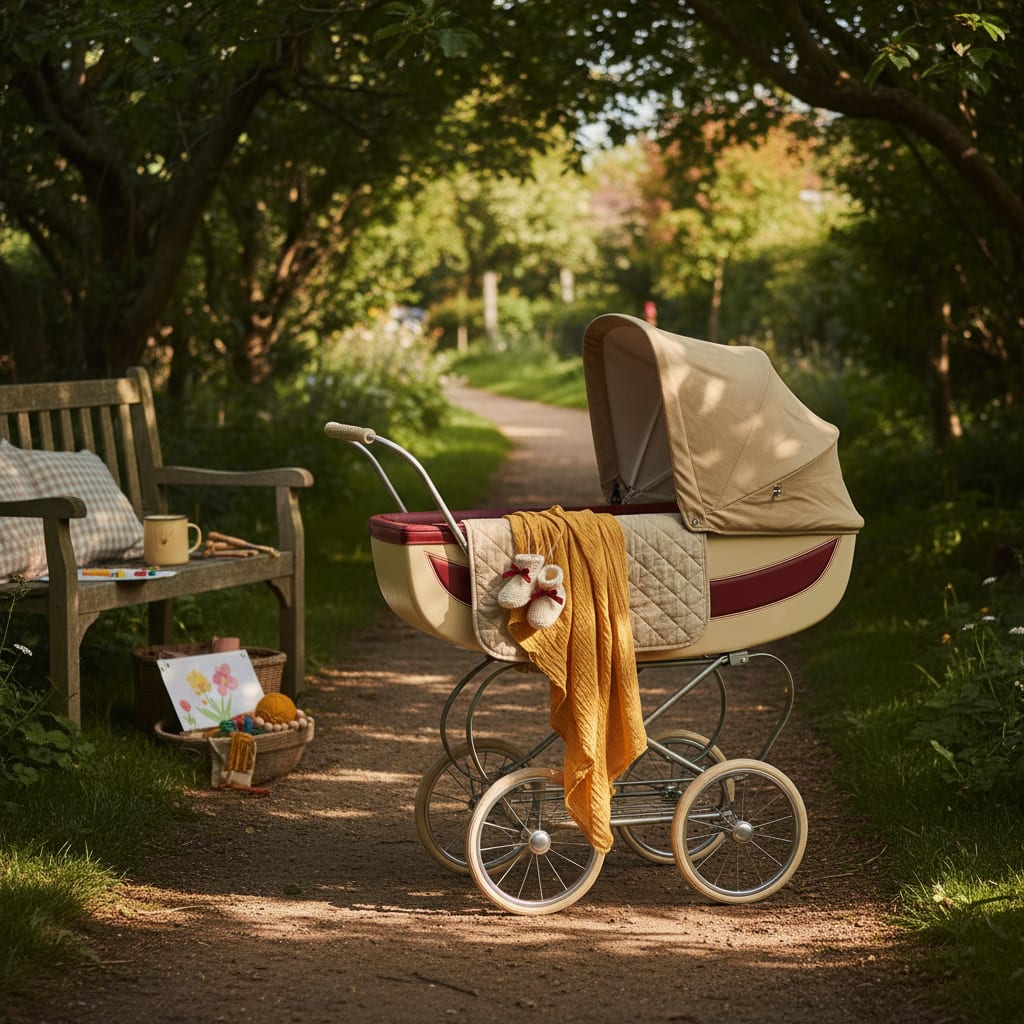
If the grandbaby will only nap in the pram, the car seat or the swing, nothing is wrong with them. Motion soothes newborns, motion naps are real sleep, and most babies grow out of the phase without anyone doing anything clever. The two things worth knowing as the grandparent: motion naps tend to run short and light, and a car seat or swing is a safe place to fall asleep under supervision but not the place to leave a baby sleeping for the afternoon. Here’s the useful version of both, plus what a grandmother can actually do to help.
Why motion works so well on a small baby
It’s not a bad habit somebody taught them. A newborn spent nine months being walked around inside somebody, so gentle continuous movement is the most familiar sensation they own. Add the hum of a car engine or a stroller wheel on pavement and you’ve reproduced the only home they’d ever known.
We did exactly the same thing, incidentally. Every grandmother reading this has driven a loop of the same three streets at eleven at night. We called it “she’ll only settle in the car”; today’s parents call it a motion-dependent nap and read three articles about it. Same baby, better vocabulary.
Why the nap ends the moment the wheels stop
The complaint I hear most from my own children isn’t the motion — it’s that the nap is over the instant the pram stops moving, or forty minutes in, on the dot.
Babies cycle through lighter and deeper sleep in fairly short stretches, and in the early months they surface between cycles rather than joining them up. Motion carries them across that gap; when the motion stops, the gap is where they wake. That’s why the car nap ends on the driveway and why the pram lap has to keep going past the house. If you want the properly explained version to hand to a bewildered parent, Betteroo’s guide to why naps end after half an hour covers it without making anybody feel got at.
The safety part, said once and said plainly
This is the bit that’s genuinely changed since we were doing it, so it’s worth being precise.
- A baby falling asleep in a moving car seat, stroller or swing is normal and fine while you’re there and watching.
- Car seats, swings, bouncers and strollers are not recommended as routine sleep places. When you get home, move the baby to a flat, firm surface — crib, play yard, bassinet — on their back.
- Never leave a baby sleeping unattended in an inclined seat. A small baby’s head can slump forward in a semi-upright seat in a way that restricts their airway.
- Inclined sleepers marketed for overnight sleep were pulled from the US market years ago. If there’s one in the attic, don’t use it.
- Prams: if it lies flat, a nap in it is much closer to a proper sleep surface. Flat is the thing to look for.
Say that once, kindly, if it needs saying at all. Don’t say it twice. The wider list of what’s moved since our day is in safe sleep rules for grandparents, and honestly, most of it is a relief — the rules got simpler, not fussier.
What a grandmother is uniquely good for here
Here’s my favourite thing about this phase: the fix for a motion-dependent baby is a person with time and legs, and that is precisely what a grandparent has and a new parent does not.
- Be the motion. Take the pram out for an hour. Walk the loop. The baby sleeps, the parent sleeps, and nobody has to solve anything today.
- Take the driving shift. If the car is the only thing that works during a rough week, do the driving so a parent can stay home and lie down.
- Do the transfer. Moving a sleeping baby from pram to crib is a skill, and it’s easier for someone not running on four hours’ sleep. Go slowly, keep a hand on the chest for a few seconds after you set them down, and accept a fifty per cent success rate cheerfully.
- Hold the baby for the second half. If the nap breaks at thirty minutes, a grandmother’s chest is a perfectly respectable way to extend it. Sit down, stay awake, and enjoy the least productive and most valuable hour of your week.
None of this requires an opinion about sleep training. It requires you to be available, which is the whole grandmother job description.
Helping them move away from motion — only if asked
If the parents want to reduce the motion dependence, the general shape is: keep the ingredients, remove the movement. Dark room, white noise, the same short wind-down, put down drowsy rather than deeply asleep, and accept some short naps while the baby learns the new arrangement. It usually takes a couple of weeks and it usually gets worse before it gets better.
But — and I mean this — that’s the parents’ call and the parents’ timeline. My rule for this entire era is their baby, their rules, my cookies. If they’ve asked, help. If they haven’t, push the pram.
Plenty of families now follow a written plan rather than improvising, which quietly solves the grandparent problem too. My daughter’s crowd uses an app that builds each day’s naps and bedtime around the baby’s age and temperament, and the practical effect on my Tuesdays is that I’m not guessing. She sends the day’s plan, I follow it like sheet music, and the “should I have put her down at two?” conversation never happens.

When the motion baby comes to your house
Two practical things make grandma-day easier with a motion sleeper.
First, have somewhere flat and boring for them to land: an approved play yard with a firm sheet and nothing in it, in a dark-ish room, with a sound machine running. The full setup list is in baby sleep at grandma’s house, and it’s shorter than you’d fear.
Second, have a pram-worthy route. A pavement circuit you can walk without thinking, in the shade, with somewhere to sit at the halfway point. Mine takes thirty-eight minutes and I could walk it asleep, which some days is roughly what happens.
It ends, and sooner than you’d think
Every motion sleeper I’ve met — two of my own children and two of my grandchildren included — eventually became a person who sleeps in a bed. The phase feels permanent to the parents in the middle of it and looks like about four months from where I’m standing. Say that to them; it’s the most useful sentence a grandmother owns, and it’s true. A wider tour of what’s changed since we did this is in baby care then vs now.
FAQ: babies who only sleep in motion
Is it bad if my grandbaby only naps in the stroller or car?
No. Motion sleep is real sleep and it’s extremely common in the first months. The only cautions are supervision and surface: stay with them, and move them to a flat firm space on their back once you’re home.
Can a baby sleep in a swing?
Under supervision, briefly, yes — but a swing isn’t a recommended place for routine or unattended sleep. Turn it off and move a sleeping baby to a crib, bassinet or play yard rather than leaving them in a semi-upright seat.
Why does the nap end as soon as the car stops?
Because young babies surface between short sleep cycles, and motion is what carries them across the gap. When the motion stops, that transition becomes a full waking. It’s developmental, not a habit anyone created.
How do I move a sleeping baby from the pram to the crib?
Slowly, feet first, keeping the head supported, and then leave a warm hand resting on their chest for a few seconds before you withdraw. A dark room and white noise already running improve your odds considerably. Expect it to fail sometimes.
When do babies stop needing motion to nap?
Most grow out of it during the first year as their sleep consolidates, often noticeably by around four to six months. Some families actively help it along; many simply wait. Either is a legitimate choice, and it’s the parents’ choice to make.