❋ Grandma Life ❋
Thanksgiving With Grandkids: Hosting Without Tears
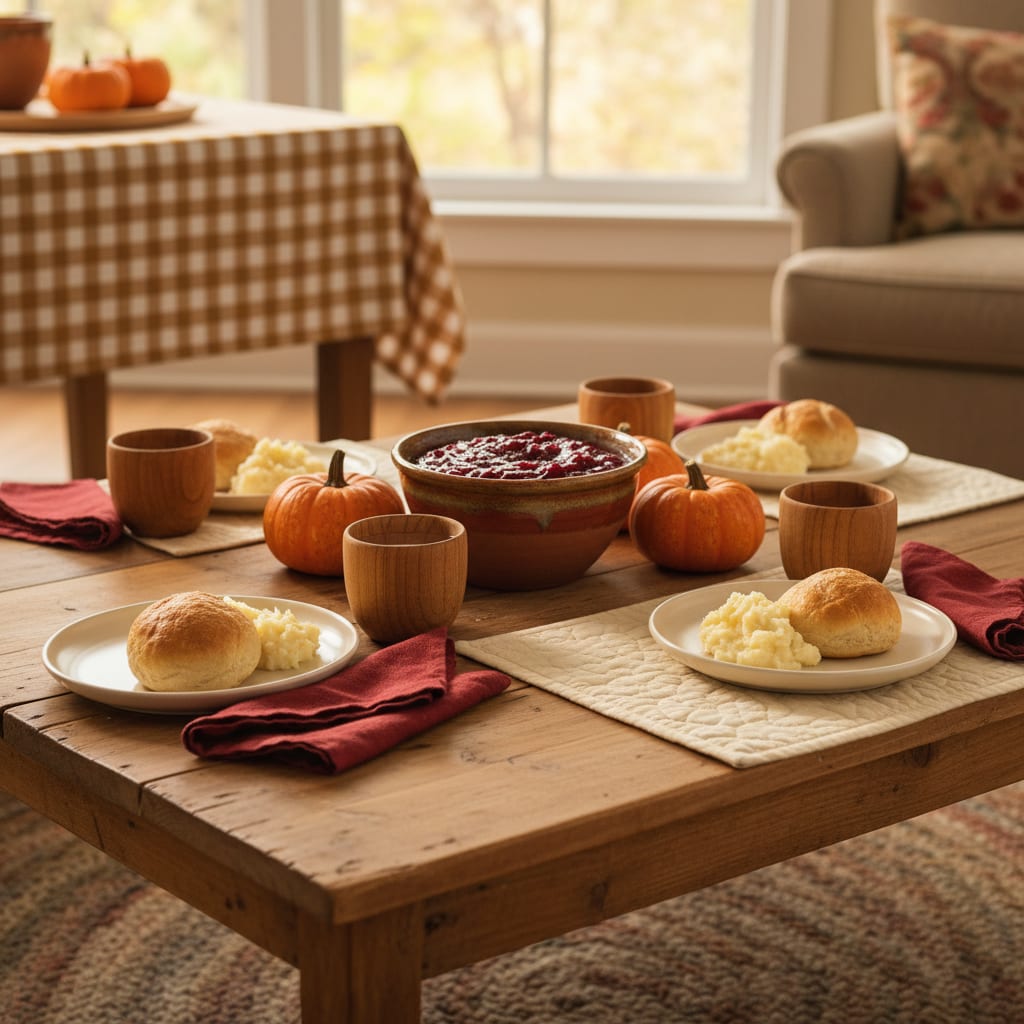
Hosting Thanksgiving with grandkids goes best when you plan for the smallest guests first. Put the kids’ table within sight of the grown-ups, not in another room. Cover it in paper and give it one adult anchor. Serve two dishes every child recognises, and keep the AAP’s choking foods (whole grapes, nuts, popcorn, raw carrot sticks) off the under-fours’ plates. Hand out real jobs instead of entertainment. And let the parents run their own children, at your table as much as at theirs. The turkey is the easy part.
Start with the youngest guest’s day
The meal time is the first decision, and the baby’s nap should make it. I’ve written that whole day out in Thanksgiving at Grandma’s: the baby’s nap and the drive home: which room the play yard goes in, why the coat bed is off limits, and when to send everyone home. I won’t repeat it here. The short version is one phone call a week ahead: ask the parents when the nap has to happen, and serve dinner on either side of it.
Everything below assumes you’ve made that call.
The kids’ table: close, covered and anchored
A kids’ table in the den, two rooms away, sounds peaceful. In practice it means one cousin under the table, one crying, and nobody seeing either. I set mine at the end of the dining room, or butted up against the big table, so the parents can see their own children without getting up.
Three things make it work:
- Seats that fit. A two-year-old on a dining chair is eating at chin height and standing up by the second bite. A booster that straps to an ordinary chair, like the Ingenuity Deluxe Comfort booster seat, puts a toddler at the table. Babies stay in whatever high chair or seat the parents bring.
- A paper tablecloth. A length of brown kraft paper taped over the table becomes the placemats, the drawing pad and the spill catcher. Write each child’s name at their place and let them decorate it before the food arrives. Washable markers are for the preschoolers and up. The American Academy of Pediatrics lists pen and marker caps among household choking hazards, so the caps stay at the big-kid end and the baby gets a spoon to bang.
- One adult anchor. Not a rotating supervisor, one named grown-up who sits at the kids’ table for the meal. In my family it’s usually me or my oldest daughter, and we both quite like it.
A menu small guests can actually eat
You do not need a children’s menu. You need two things on the table that every child recognises, usually plain rolls and buttered noodles or mashed potatoes, and a plate made up before it goes down.
The relish tray is where I slow down. HealthyChildren.org’s choking prevention page says to keep high-risk foods from children “until 4 years of age or older.” Its list reads like a Thanksgiving spread:
- whole grapes
- nuts and seeds
- raw vegetables such as carrot sticks
- raw fruit chunks such as apple pieces
- popcorn and marshmallows
- chunks of meat or cheese.
It also notes that round, firm foods “can be served if completely chopped into tiny pieces,” and recommends cutting food for young children “into pieces no larger than one-half inch.” So the toddler’s turkey gets cut small, the grapes get quartered, and the bowl of mixed nuts sits up at the grown-ups’ end.
The same page has a line every grandmother at a big family table should know: “Many choking incidents happen when older brothers or sisters give dangerous foods, toys or small objects to a younger child.” Cousins count. A seven-year-old who thinks it’s funny to feed the baby a cashew is not being naughty, just seven. That’s why the anchor adult sits with them. The page also asks that children “eat at the table or sit down when they eat,” so no roaming the house with a roll.
Food allergies are the parents’ call, not mine. I ask every family the week before, I write the answers on a card on the fridge, and anything I’m unsure about goes to the parents before it goes on a plate.
Jobs, not entertainment
A retired second-grade teacher’s secret: children don’t want to be entertained nearly as much as they want to be needed. A child with a job is a child who isn’t bored, and a bored child is the one who melts down at four.
Real jobs I hand out by age:
- Two and three: carrying the napkins to the table one at a time, putting a roll on each bread plate, and stirring anything cold.
- Four and five: tearing bread for the stuffing, washing potatoes at the sink on a step stool, and placing name cards they decorated.
- Six and up: folding napkins, setting the forks, filling water glasses from a small jug, and going round with the “what are you thankful for?” question before the meal.
If you’re doing pies with them the day before, my baking with grandkids guide has the age-by-age kitchen jobs and the raw-dough rule that has changed since we raised our own. For the half hour before dinner, when the oven is full and everyone is starving, Betteroo has a list of table crafts small hands can manage that a five-year-old can finish before the gravy does.
Skip the balloons on the front door. The AAP page says balloons “pose a choking risk to children up to 8 years of age,” and a Thanksgiving house has a lot of children under eight.
The house, the night before
Hosting with small children is mostly done before anyone arrives.
- Walk the floor at toddler height. Hot dishes and lit candles migrate to table edges during a long meal, and a crawler finds the dropped coins and button batteries under the sofa. My toddler-proofing room-by-room guide has the ten-minute crawl I do before every holiday. The AAP page says to check “under furniture and between cushions” too.
- Give the stroller and the diaper bag a home by the door, so nobody leaves them in the hallway.
- Claim one quiet room for nursing, nap and meltdowns. It isn’t the coat room.
- If anyone is staying over, make the guest bed properly. I’ve written about guest-room pillows for grown children who keep coming back, and a good night’s sleep after the drive is why they do.

Their children, their rules, my table
This is the part that decides whether Thanksgiving ends in tears, and they aren’t always the children’s.
Your grandchild may eat dessert first at home, or never. They may have a tablet at the table, or be banned from one. One family’s toddler is allowed to leave the table when they’re done; another’s sits until everyone finishes. Whatever the parents do, do that. If I disagree, I keep it to myself on the day and raise it on a quiet Tuesday, if ever. The babysitting rule I live by applies on holidays too: their rules, on my sofa.
And please, no “clean your plate.” A child who eats four bites of roll and a spoonful of potato at a loud, exciting table has eaten Thanksgiving dinner.
FAQ: Thanksgiving with grandkids
Should the kids eat at a separate table on Thanksgiving?
A separate table works well for children who can feed themselves, as long as it’s in the same room as the grown-ups and one adult sits with it. Babies and young toddlers usually do better beside a parent.
What should little kids eat at Thanksgiving dinner?
Two familiar foods, such as rolls and mashed potatoes, plus small tastes of the rest. For under-fours, cut food small and keep whole grapes, nuts, popcorn and raw carrot sticks off their plates.
How do I keep grandkids busy while dinner cooks?
Give them real jobs: carrying napkins, tearing bread, placing name cards, or decorating a paper tablecloth. A job lasts longer than a toy and makes them part of the meal.
What if the parents’ food rules are different from mine?
Follow theirs at your table. Holidays are the worst day to renegotiate a family’s rules; if something truly worries you, talk to the parents privately on another day.