Can a grandchild sleep in grandma’s bed at a sleepover? For a baby under 12 months, no, not once, not for a nap, however carefully you arrange the pillows: the baby sleeps in their own crib or play yard beside your bed. After the first birthday it becomes a family decision, and the family that decides is the parents, not grandma. For a preschooler or a school-age child, the night in grandma’s bed can be a lovely treat, as long as everyone knows it is a treat and not the new plan.
Every grandmother gets asked. Usually it’s at 9:40 p.m., in a small voice at the bedroom door, holding a blanket. Here is how I answer it, by age, after thirty-one years of second-graders and five grandchildren who have all tried it on me.
Under 12 months: the baby never shares your bed
This is the one part of the post with no wiggle room. The American Academy of Pediatrics’ parent guide to safe sleep says the AAP recommends that parents “avoid bed sharing with their baby under any circumstances,” and recommends sharing a room instead: the baby’s sleep space close to your bed, “but not in the same bed.” The page also notes that its recommendations are for babies up to 1 year of age.
Grandmothers need to read the next part twice. The NIH’s Safe to Sleep campaign lists the situations that make sharing an adult bed with a baby more dangerous, and one of its “high risk” situations is when “the adult is a caregiver other than baby’s parent, such as a grandparent or sibling.” Its “very high risk” list includes an adult who is very tired or “taking medication that makes them drowsy.” That describes a lot of us at 2 a.m. on a sleepover night.
So the baby gets their own space next to you. A Graco Pack ‘n Play set up beside your bed works well: baby on their back, firm flat mattress, fitted sheet, nothing else in it. If you lift the baby into your bed to feed or settle them, put them back in their own space before you get sleepy. My full list is in safe sleep rules for grandparents.
Ages 1 to 2: the parents’ call, and my floor-bed answer
After the first birthday, the AAP’s infant rules no longer apply in the same way, and the question becomes one for the parents. Ask them before the visit, not at the bedroom door.
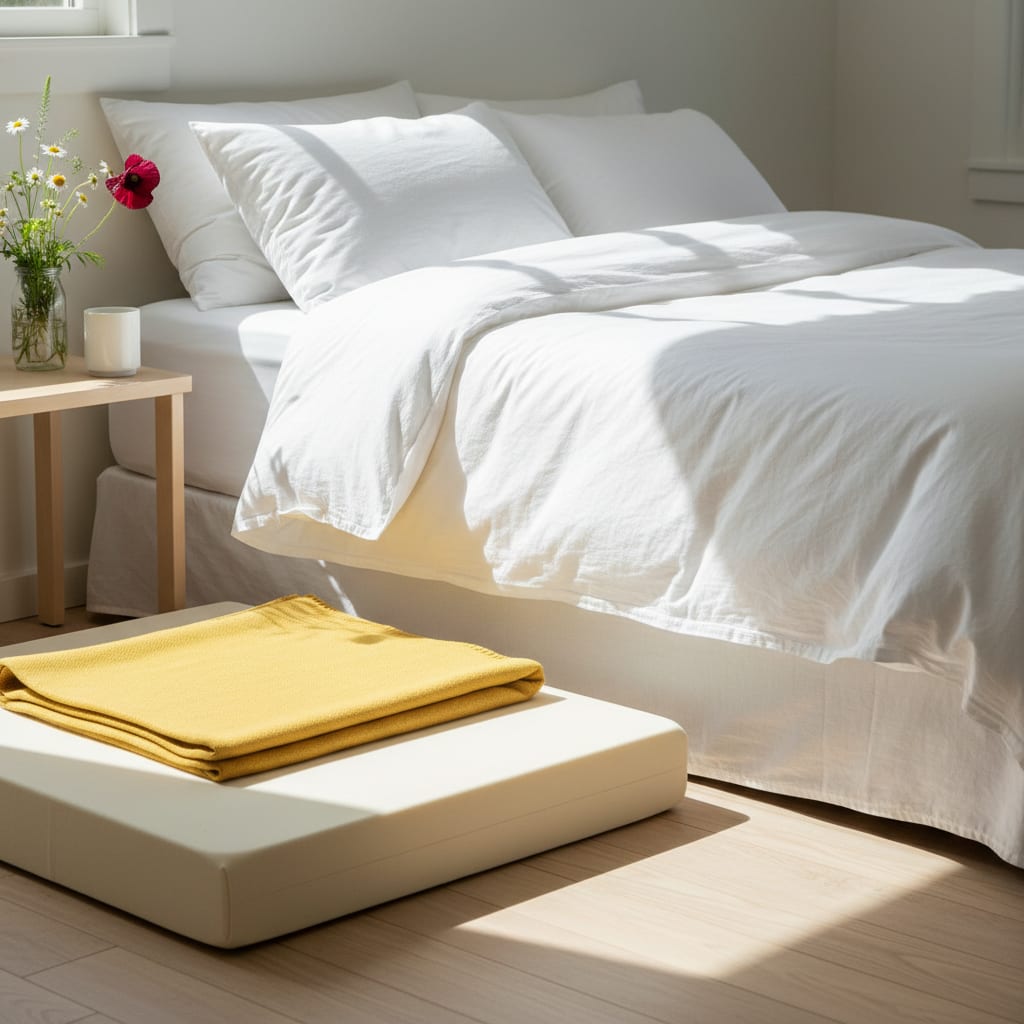
My own answer for this age is a halfway house. A toddler in a big soft adult bed with heaped pillows and a gap down by the wall is not a setup I like. Neither is a fall from the edge of a tall old bed. So when a one- or two-year-old wants to be near me, I put a floor bed beside my own bed: a folding foam mattress like the Milliard tri-fold, made up with their own sheet and the blanket from home. They can reach out and find my hand. I can sleep. Nobody falls anywhere.
Whatever the parents say, follow it to the letter. Some families bed-share with their toddlers at home and are perfectly happy; some have spent three months getting a child into their own bed and will not thank you for undoing it on a Saturday.
Ages 3 to 5: night fears and the visit that ends in your bed
This is the age that knocks on the door. A strange room, a different nightlight, the noises an old house makes: many children are afraid of the dark at home, never mind at grandma’s. Cincinnati Children’s says on its page about bedtime fears that it is normal for young children to be afraid of the dark, and that most children have night-time fears at some point.
What I do:
- Comfort first, in their room. Cincinnati Children’s advises that if a child comes to your bedroom at night, you take them back to their bed and remind them they are safe. I sit on the edge of the bed for a few minutes and say very little.
- Make their room feel like home. A dim nightlight, the door ajar, the comfort object from home. The same page says dim light at bedtime is fine as long as it doesn’t interfere with sleep, and that leaving the door open can help. I keep Emotionlite plug-in night lights in the guest room and the hall.
- Stay close, occasionally. The page says it’s okay to occasionally stay by a very frightened child’s bed until they fall asleep, but not too often, and not two nights in a row.
The American Academy of Pediatrics, in its tips on ending bedtime battles, puts it plainly: “Do not let your child sleep in the same bed with you. This can make it harder for them to fall asleep when they are alone.” That is the reason I hold the line on ordinary nights. The child goes home and has to fall asleep alone in their own bed on Monday.
Ages 6 and up: the special night
By six or seven, a night in grandma’s bed is usually not about fear. It’s about a story that runs late, a thunderstorm, or wanting to be the one who gets to. I’m a softer touch at this age, with the parents’ blessing.
Betteroo’s guide to what happens when a child keeps ending up in a grown-up’s bed says that for a healthy child past infancy, it is “not harmful in itself,” and that it is worth changing when it costs anyone sleep. That matches what I’ve seen. A single named night is a tradition. The trouble starts when it becomes the only way the child will sleep at your house.
So I name it. “The last night of the visit is a grandma’s-bed night,” or “thunderstorm nights only.” Children love a rule they can quote. Grandpa, for the record, takes the guest room on those nights and calls it a vacation.
Grandma’s sleep counts too
A sleepy six-year-old kicks like a mule. If you share your bed, you’ll be the one paying for it at the lunch table tomorrow. If that’s a problem, the floor bed works at this age too, and it still feels like an adventure.
 One bedtime plan for both houses
Betteroo builds an age-based sleep plan the parents can share with Grandma, so a sleepover runs on the same bedtime and the same steps as home.
Take the sleep quiz →
Ask the parents three questions before the visit
- Do you share a bed at home, and at what age did that stop? You want to match home, not start something new.
- What should I do if they come in at night? Walk back, floor bed, or “it’s fine for one night.”
- Is a special grandma’s-bed night allowed? If yes, which night.
My checklist for the rest of the visit is in sleepovers at grandma’s house, and if the trouble starts after you’ve gone home, see toddler sleep after grandma leaves.
FAQ: grandchildren and grandma’s bed
Can a baby sleep in grandma’s bed for a nap?
No. The AAP recommends against bed-sharing with a baby under any circumstances, and Safe to Sleep lists a caregiver other than a parent, such as a grandparent, as a high-risk situation. Use a crib or play yard.
At what age can a grandchild sleep in my bed?
There is no set age in the sources I trust for children past their first birthday. It’s a family decision. Ask the parents, and match what they do at home.
What if my grandchild climbs into my bed in the night?
For a frightened preschooler, comfort them and walk them back to their own bed. If you’ve agreed with the parents that it’s a special night, enjoy it.