❋ Gifts & Gear ❋
The Grandma Diaper Bag: What to Actually Pack
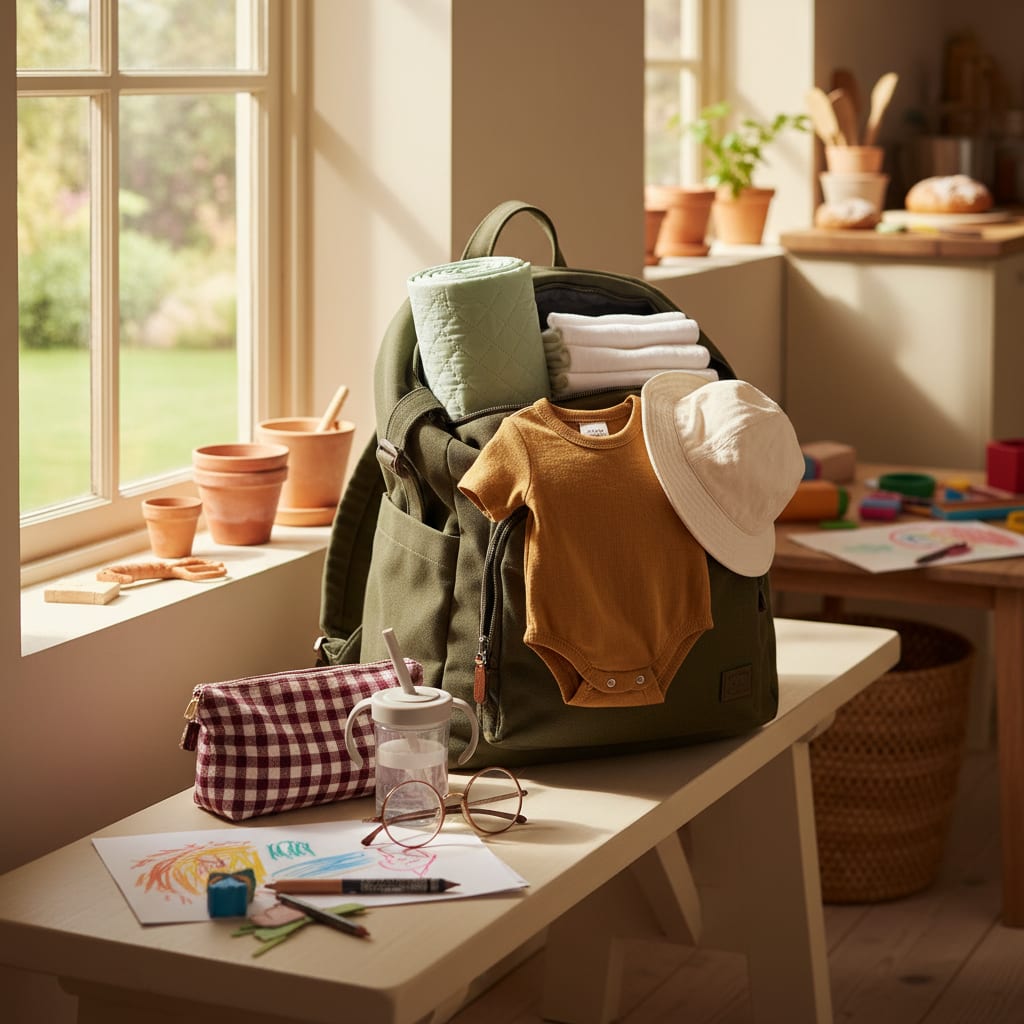
A grandma diaper bag should be packed once, kept packed, and restocked the moment you get home — because the outings that go wrong are the ones where you borrowed the parents’ bag and discovered at the duck pond that it held two diapers and no wipes. Your own bag, stocked to your own standard, is the difference between a relaxed morning out and an early trip home. Here’s exactly what lives in mine, what changes with the child’s age, and the grandmother-specific items nobody else’s packing list includes.
Why you want your own bag
Borrowing the parents’ bag makes you dependent on someone else’s packing under someone else’s pressure, and it means the bag goes home with the child every time. Keep your own, pre-loaded, hanging on the hook by the door. Then a spontaneous “can you take her for two hours?” needs nothing but shoes.
The bag itself matters less than people pretend, but two features earn their keep: it must go on your back, and it must open wide enough to find things one-handed. A backpack style like the Skip Hop Forma keeps both hands free for a stroller, a handrail, or a toddler making a break for the road. If you’d rather carry a bag you already love, a plain tote works fine — just add a wipe-clean pouch inside so the diaper supplies don’t migrate.
The core kit that never comes out
This stays in the bag permanently, whatever the outing:
- Diapers — four for a short outing, six if you’re an optimist, plus one size up in case someone grew.
- Wipes — a full pack, not the sad three left in a travel case.
- A changing mat — a foldable one like the Skip Hop Pronto holds a few diapers and wipes and unfolds one-handed onto a bench, a back seat, or a public changing table you’d rather not touch.
- Diaper cream in a small tube, the brand the parents use.
- Two spare outfits, one weather-appropriate, plus spare socks — and a spare top for you, learned the hard way at a garden centre.
- Wet bags — two, for soiled clothes and for the diaper you’ll be carrying until you find a bin.
- Hand sanitiser, tissues, a small first-aid pouch with plasters and any allergy medication the parents have supplied in writing.
- Sun hat and sunscreen in summer, spare hat and mittens in winter. They live in the bag; the season decides which comes out.
What changes with age
Under six months: whatever feeding kit the parents send, a couple of muslin cloths over your shoulder, a light blanket for shade and floor time, and a pacifier with a clean spare in a case.
Six to twelve months: add a bib, a couple of approved finger foods, an open or straw cup, and something to chew on. Nothing new food-wise without the parents’ say-so — first tastes belong to them, not to grandma at a café table.
One to three: snacks in a spill-proof pot, a water cup, a small distraction toy, and pull-ups if potty training has begun, plus a fold-up potty seat if the child uses one. This is also when the bag starts carrying a small water-reveal painting pad instead of a rattle — quiet, reusable, and a small miracle in a waiting room.
Three and up: the bag shrinks to snacks, water, wipes, one spare outfit and a plastic bag. The freedom is glorious and arrives quite suddenly.
The grandma-only extras
These are the items I’ve never seen on a parent’s packing list and would not go out without:
- Your reading glasses, because medication labels and menus do not enlarge themselves.
- A phone charger or power bank. Your phone is the map, the camera and the emergency line.
- A written card with the child’s full name and date of birth, the parents’ phone numbers, the pediatrician, allergies, and written permission to seek medical treatment. Tuck it in the front pocket and hope never to use it.
- A snack and a bottle of water for you. Grandmothers skip lunch and then wonder why the afternoon went sideways.
- Your own medication, if you take any at a fixed time — in a childproof container, never the open weekly organizer.
Pack for the schedule, not just the bag
The most useful thing in my bag isn’t in the bag at all: it’s knowing when the baby is due to sleep. An outing planned around the nap goes beautifully; the same outing thirty minutes into an overtired stretch does not. Ask for the day’s wake times before you set out, and if you’re hazy on how long a baby of that age can happily stay awake, it’s worth five minutes of reading — it makes you look like a genius and gets you invited out again.
Restock the moment you’re home, while you still remember what ran out. A bag you have to check before every outing isn’t a system; it’s another chore. The rest of the grandma’s-house kit is in baby essentials to keep at grandma’s house, the overnight version is my sleepover at grandma’s checklist, and if someone is asking what to buy you, a proper bag is high on my gifts for a new grandma list.
FAQ: the grandparent diaper bag
What should grandma keep in a diaper bag?
Diapers and wipes, a foldable changing mat, cream, two spare outfits, wet bags, hand sanitiser, a small first-aid pouch, and weather gear. Add age-appropriate feeding and snack items, and keep it permanently packed rather than assembling it each time.
Do grandparents need their own diaper bag?
It’s the single most useful thing you can buy yourself. Your own bag means you’re never dependent on what the parents remembered to pack, and it makes short-notice babysitting a matter of picking up a bag and leaving.
What size diaper bag is best for grandparents?
Medium, and worn on the back. A backpack keeps both hands free for a stroller or a small hand, and anything larger than about a day pack becomes something you leave at home — which defeats the purpose entirely.
How do I carry medication for a grandchild?
Only what the parents have supplied, in its original packaging, with the dose written down and signed by them. Keep it separate from your own medication, and never give anything — including painkillers or teething gels — without the parents’ explicit permission.