❋ Gifts & Gear ❋
Baby Essentials to Keep at Grandma's House
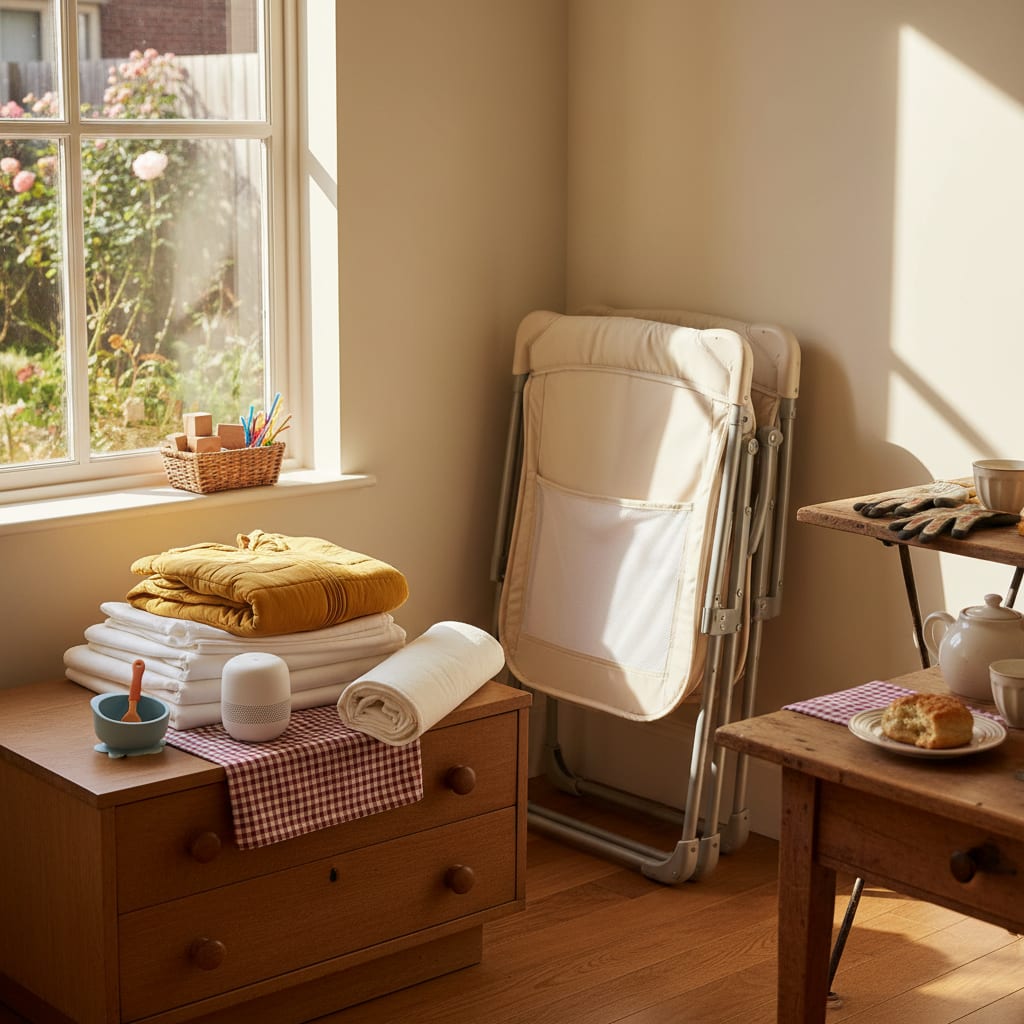
The baby essentials to keep at grandma’s house come down to five categories: a safe place to sleep, a way to travel, a way to eat, a way to change a diaper, and a small stash of comfort supplies. That’s it. You do not need a second nursery, and you should not buy a single large item before asking the parents what they actually use — duplicate gear is the most expensive kind of wrong. Here’s my honest list after seven years and five grandchildren, sorted by what earns its storage space.
Buy in this order
Start with the sleep space. Everything else can be borrowed from the diaper bag on the first few visits, but a baby who has nowhere safe to nap ends the visit early. After that: car seat if you’ll ever drive them, feeding setup, changing supplies, and only then the nice-to-haves.
And before any of it, ask the parents. They’ll tell you the brand of diaper that doesn’t leak on their baby, whether their child hates a particular sleep sack, and which of your generous ideas they’d quietly rather you didn’t buy.
1. A safe sleep space
A portable crib or play yard is the one item I’d buy first and never regret. It meets current standards, it folds into a closet between visits, and it costs a fraction of restoring the crib in your attic — which almost certainly does not meet today’s rules on slat spacing, hardware and mattress fit. Two snug fitted sheets to match, and nothing else in it: no bumpers, no pillow, no quilt, no positioners.
For warmth, a cotton sleep sack does the job a blanket used to. It’s worth owning two in the current size and checking which weight the parents use — Betteroo’s rundown of what to look for in a toddler sleep sack is a good primer if you’re buying blind. Add a plain white-noise machine like the Dohm and something to darken the room, and the room’s job is done. The full setup, curtains and all, is in baby sleep at grandma’s house.
2. A car seat that lives in your car
If you’ll ever drive the baby — to the park, to daycare pickup, to the pediatrician in a pinch — a seat that stays installed in your car is worth every penny, because moving one seat between two cars is how seats get installed wrong. The Cosco Scenera NEXT is the classic grandparent pick: inexpensive, light, rear- and forward-facing, and narrow enough to leave in place permanently.
Three non-negotiables. Buy new, never secondhand, and never accept a hand-me-down seat with an unknown history. Check the expiry date stamped on the shell. And have the installation checked — many fire stations and hospitals will do it free — because a correctly chosen seat installed loosely is not a safe seat. Whatever the parents use, match their rear-facing rules; they don’t change at grandma’s house.
3. The feeding setup
A hook-on chair like the Inglesina Fast Table Chair clamps to your own table, holds a baby from around six months to toddlerhood, and folds into a bag — far better value than a full-size high chair you’d trip over for the other 340 days of the year. Add a couple of suction bowls, soft-tipped spoons, an open cup or two, and a pack of bibs with sleeves for the painting-with-yoghurt phase.
Bottles and formula are the parents’ territory, not yours: they’ll send what they use, and formula brands are not the place for grandmotherly initiative. Keep a shelf of shelf-stable snacks the parents have approved and let them refresh it.
4. Changing supplies
A wipeable changing mat on a low bed or the floor beats a changing table — no fall risk and nothing to store. Keep a small stack of diapers one size up (they grow between visits, and a slightly large diaper still works), unscented wipes, the cream the parents use, a lidded bin, and a couple of wet bags for the ride home. Plus two spare outfits in a drawer, because two is the number of times a visit can go wrong.
5. The small comforts and the things to skip
The last shelf: a soft blanket for floor play and stories, a couple of muslin cloths, a sun hat, and a small rotating basket of toys — which deserves its own list, and has one in the best toys to keep at grandma’s house.
What I’d skip: a full-size crib, a changing table, a baby bath (the kitchen sink or a bath seat the parents approve works fine), a bottle warmer, a wipe warmer, and anything sold with the word “system” in it. Also skip the bouncers, swings and inclined seats as places to sleep — babies nap in the crib, not propped up.
If the grandchildren are visiting for more than a day, the other half of the shopping list isn’t baby gear at all: it’s a decent guest bed for the exhausted parents, which is why my guest room pillows post exists.
FAQ: baby gear for grandparents
What baby items should grandparents keep at their house?
A portable crib with fitted sheets and a sleep sack, a car seat if you’ll drive, a hook-on or portable high chair, changing supplies with spare clothes, and a small basket of toys. Everything else can travel in the diaper bag.
Can I use the crib I kept from my own children?
Almost certainly not. Standards for slat spacing, hardware, drop sides and mattress fit have all tightened since our babies were small, and drop-side cribs can no longer be sold in the US. A current-standard portable crib is safer and cheaper than restoring an old one.
Do grandparents need their own car seat?
If you’ll ever drive the grandchild, yes — a seat that stays installed in your car is safer than moving one between vehicles. Buy new, check the expiry date, follow the parents’ rear-facing rules, and get the installation checked.
How much should I spend on baby gear for my house?
Less than you think, and in stages. Buy the sleep space first, wait to see how often the visits actually happen, and ask the parents before every big purchase — they often have a spare, a preference, or a strong opinion you’d rather hear before the box arrives.