Jewish Grandma Names: Savta, Bubbe & Grandma in Hebrew
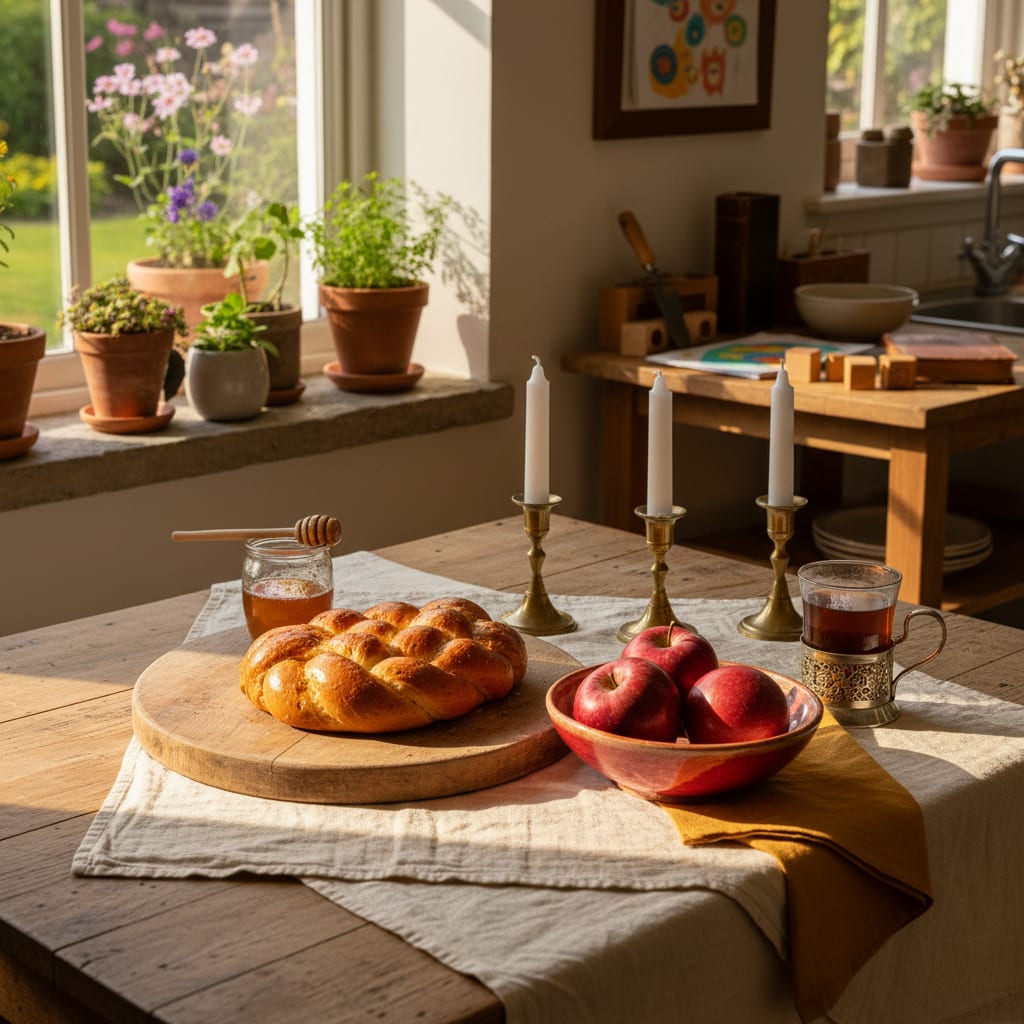
Jewish grandmothers have two headline names and they come from two different languages. Bubbe (BUH-beh) is the Yiddish one, Ashkenazi and old-world and warm as a kitchen. Savta (SAHV-tah) is the Hebrew one, modern and Israeli, and it’s the same name as the Safta you’ll see everywhere — one word, two spellings. Sephardi families reach for Nona, Persian families for Maman Bozorg, Syrian families for Sitto. Below: pronunciation, spellings, the great-grandmother question and how to choose. Every other style lives in my master grandma names guide.
My reader on this one was Rochelle, who ran the school library across the hall from my classroom for eleven years, is Savta to four, and has strong feelings about all of it.
Grandma in Hebrew: savta
Grandma in Hebrew is savta — סָבְתָא — said SAHV-tah and very often heard as safta. Grandpa is saba (SAH-bah); a great-grandmother is savta rabta. That is the whole short answer. The rest of this page is the spelling question, the Yiddish alternative, and which of the two suits the woman you intend to be.
Bubbe and Savta, side by side
They aren’t rivals so much as two different rooms of the same house.
Bubbe is Yiddish, the everyday language of Ashkenazi Jewish life in Central and Eastern Europe. It carries all of that with it — which is exactly why some grandmothers adore it and others flinch. To one woman it means her own grandmother’s kitchen; to another it means being cast as ancient at fifty-four. Both reactions are common and neither is wrong.
Savta is Hebrew, the living, spoken language of Israel, and it sounds current in a way Bubbe deliberately doesn’t. It arrived in American families largely through Israeli relatives, day-school Hebrew and grandmothers who wanted something Jewish that didn’t come with a rocking chair attached.
Here’s a nice bit of etymology for the Bubbes: the word traces back through eastern Middle High German and Slavic to a root meaning simply old woman. That makes it a distant cousin of the Polish Babcia — one reason the two names feel so alike in the mouth, as I get into in Polish grandma names. Names travelled with people, and Yiddish picked up what it lived beside.
Why Safta and Savta are one name
This one comes up constantly, so, briefly, from a woman who spent thirty-one years explaining spelling to seven-year-olds.
Hebrew is written in a different alphabet, so every version in English letters is a transliteration — a best attempt, not a spelling. The letter in question is bet, which is pronounced “b” with a dot inside it and “v” without one. In this word it has no dot, so savta is the technically faithful transliteration.
Safta is what a great many Israelis, and nearly all small children, actually say — it’s simply easier to get out. Neither is a mistake. Pick the one that looks like the woman you intend to be, and let the grandchildren pronounce it however their mouths manage at two.
You may also meet Sabta and Savtah on greeting cards and jewelry. Same word, same woman.
The spellings, and why your family’s is right
Yiddish has the same situation and, if anything, more freedom about it. You will see Bubbe, Bubbie, Bubby, Bobe, Bobbe and Bubbeh — all the same name. There’s a diminutive too, Bobeshi, which is about as affectionate as a language gets, and my personal favourite of the lot.
My advice is the advice I’d give about any transliterated name: choose your household spelling early, use it on everything, and don’t correct your sister-in-law. Once it’s on the cousins’ birthday cards, it’s the family’s spelling and no dictionary outranks that.
Sephardi, Mizrahi and Persian names
Jewish is not one culture, and the names make that obvious the moment you look past Yiddish.
- Nona — the Ladino name, from the Judeo-Spanish spoken by Sephardi families across the Balkans, Turkey, Greece and North Africa. It sits close to the Italian Nonna, which reflects a shared Romance root rather than a shared family tree. The grandfather is Nono.
- Sitto (also Sitti) — used in Syrian Jewish families, from the Arabic for grandmother; usage varies by city of origin, and Aleppan families often don’t use it at all.
- Maman Bozorg — the Persian for grandmother, standard in Iranian Jewish families, and frequently shortened to Mamani by the grandchildren, who are the ultimate authority on these things everywhere.
- Savta again, incidentally — it crosses all of these lines, because it’s the Hebrew word and Hebrew belongs to everyone in the room.
If your family tree runs through several of these at once, which many American Jewish families do, the working solution is usually one name per grandmother rather than one name per household. The full world map of options is in my roundup of grandma names in different languages.
Great-grandmother, and the fourth generation
Hebrew builds it with a word meaning great: Savta Rabta, often heard and written as Savta Raba. Take it one further and you’re into Savta Rabta Rabta, at which point every family I know surrenders and uses a first name.
Yiddish offers Elter-Bobe and Ur-Bobe for the great-grandmother — the elter- and ur- prefixes doing the same job as our “great.” In practice, plenty of four-generation families simply let the elder keep Bubbe and give the newly promoted grandmother Savta, which solves the naming problem and the confusion in one move. If you’re facing that particular pileup, great-grandma names works through the English options too.
Grandpa pairings
- Bubbe & Zayde — the classic Yiddish set. You’ll also see Zaide, Zayda and the dialect form Zeyde; same rules as Bubbe, same freedom.
- Savta & Saba — the Hebrew pair, and the one most Israeli-influenced families use.
- Nona & Nono — the Ladino duet.
- Savta & Zayde — a mixed pair, and much more common than purists suggest. If one grandparent wants old-world and the other wants modern, let them.
A footnote for anyone who enjoys this sort of thing: Saba and Savta are actually Aramaic in origin rather than Hebrew. The strictly Hebrew words, sav and sava, went out of everyday use partly because they sound so alike. Modern Hebrew kept the Aramaic pair, and nobody in Tel Aviv loses sleep over it.
Choosing one when the family is mixed
The standing ruling in this series is that heritage names sing when there’s a thread to pull, and it holds here with an extra note of care: these names carry religion as well as culture, so they land differently from Nonna or Oma.
If you’re Jewish, take whichever fits the woman you are — there’s no seniority test and no Yiddish-speaking requirement. If you’ve converted, Bubbe and Savta are yours as much as anyone’s. If your grandchild is being raised Jewish and you aren’t, ask the parents directly and follow their answer; a great many interfaith families are delighted for one grandmother to be Savta and the other Grandma, and are the right people to make that call. And if there’s no connection at all, borrowing Bubbe for the sound of it lands as costume rather than tribute.
Then run it past the parents anyway. Their baby, their rules, my rugelach.
FAQ: Jewish grandma names
What is the Jewish word for grandmother?
There are two main ones. Bubbe is Yiddish, the Ashkenazi heritage name; Savta is Hebrew, the modern Israeli one. Sephardi, Syrian and Persian Jewish families use Nona, Sitto and Maman Bozorg respectively.
Is it Safta or Savta?
Both, for the same word. The Hebrew letter is pronounced “v” without its dot, so Savta is the closer transliteration, but Safta is easier to say and extremely widespread — especially among children.
How do you pronounce Bubbe?
Most commonly BUH-beh, though families with different regional roots say BOH-beh, and both are correct. The affectionate diminutive Bobeshi is bo-BEH-shee.
What do Jewish grandchildren call a great-grandmother?
Savta Rabta in Hebrew, often shortened in speech to Savta Raba, or Elter-Bobe in Yiddish. Many families sidestep it by giving the great-grandmother Bubbe and the newer grandmother Savta.
Can I be a Bubbe if I’m not Jewish?
If your grandchild is being raised Jewish, ask the parents — plenty of families welcome it, and it’s genuinely their decision. Without any connection to Jewish family or life, choose something that belongs to you instead; there are hundreds of options in the main names guide.