❋ Grandkid Time ❋
How to Read to Grandkids Over Video (And Books That Work)
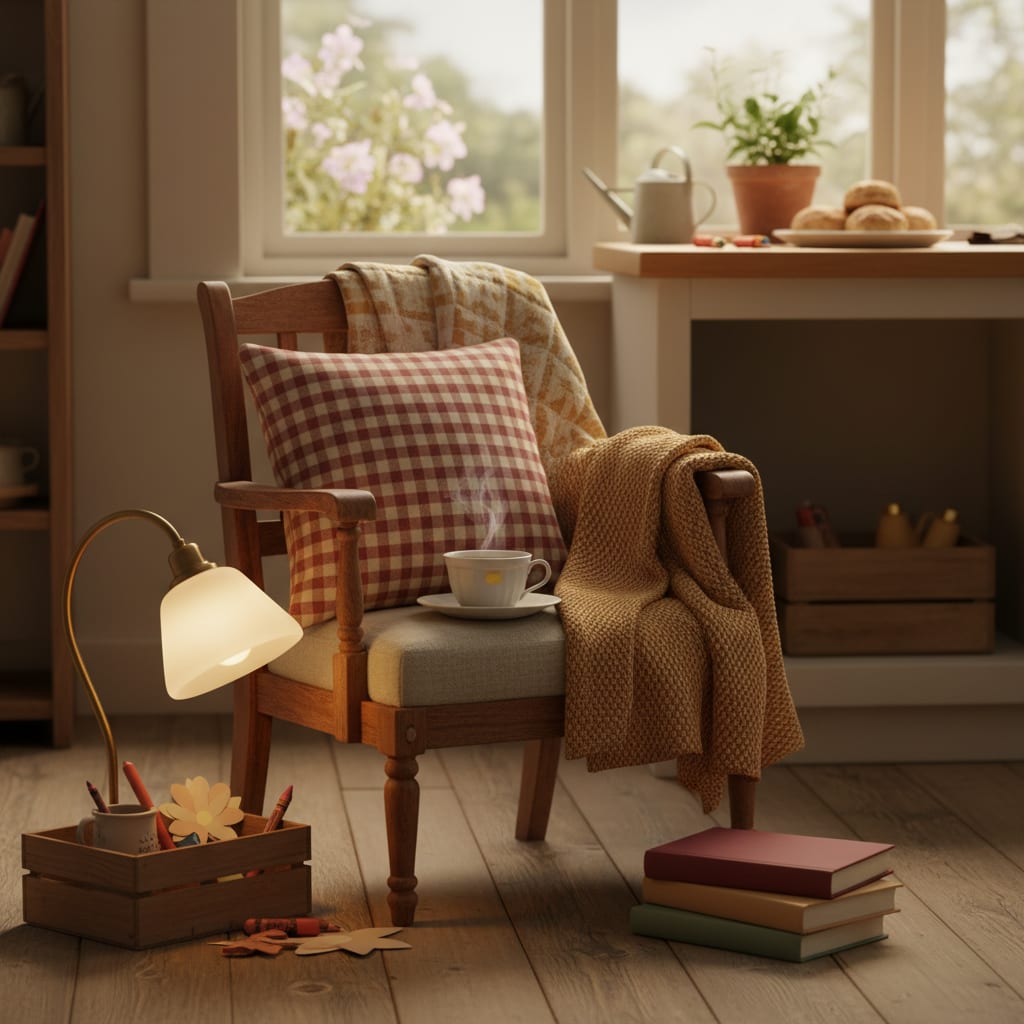
Reading to a grandchild over video works if you fix one thing first: the camera has to see the book, not you. Prop your phone or tablet up so the open page fills most of the frame, read a little slower than feels natural, and let the child interrupt as much as they like. Do that and a story over video is a genuine bedtime — the same book, the same voice, the same ending, from any distance. Below is the setup, the page-turning trick that took me a year to work out, which books survive the format at each age, and when a recorded book beats a live call entirely.
Get the camera pointing at the page
The default instinct — holding the book up to the screen with your face beside it — is why this fails for most grandparents. The child sees a wobbly page at an angle and a very large nostril.
- Prop the device on something and lean the book against it, facing the lens. Phone against a mug, tablet against a cereal box. You want your hands free.
- Aim for the page filling roughly three-quarters of the frame. Your face can drop in and out; the picture is what holds a small child.
- Light the book. A lamp beside you, not a window behind you.
- Check what the child sees. Ask the parent, once, “what’s on your screen?” It takes ten seconds and it fixes everything.
- Sit still. Small movements are enormous on a video feed. Reading is one of the few grandparent activities where holding still is the skill.
The page-turning problem, and the fix
Video lag means a child hears you say “the end of the page” and sees the turn a beat later, which is disorienting at three and infuriating at five. Two things solve it.
Say the turn out loud. “Ready? Turning.” It sounds fussy. It works, and within a fortnight they’ll be saying it with you.
Better: get two copies. Post them one, keep one. Now the child holds their own book, turns their own pages, and you’re reading alongside them rather than to a screen. This transforms the activity — it becomes the same thing you’d do on a sofa. It’s the same duplicate-object trick that makes the shared-activity ideas in video call activities grandkids won’t wander off from work so well.
Which books survive the format
Not every book reads well through a lens. What works:
Babies and young toddlers (0–2). Board books with big, high-contrast images and a strong rhythm. Anything you can chant. The words matter less than your voice doing the same thing every week.
Two to four. Repetition and prediction — books where the child can say the next line. Lift-the-flap does not work over video; the flap is invisible at that resolution and the disappointment is real. Skip anything whose joke lives in a tiny detail.
Four to six. Now you can serialise. A short chapter book, one chapter a week, ending mid-scene. This is where reading over video stops being a substitute for anything and becomes its own tradition — my six-year-old grandson and I have been through three books this way, and he remembers where we stopped better than I do.
Any age: books about being apart. They give a child language for a feeling they can’t name yet, and they’re the reason a story over video hits differently to a story on a sofa.
The recordable book: the thing I’d buy first
Here’s the honest recommendation. A live call is a relationship; a recordable book is availability. A book with your voice inside it can be opened at 6am, or on the third bad night of a cold, or forty times in one week, with nobody needing to be free.
The Hallmark recordable editions are the ones that have held up in my family — you record a line per page in your own voice and it plays back when the page turns. We’ve used the recordable Guess How Much I Love You and the recordable Goodnight Moon; both are bedtime staples that were already being read in that house, which is exactly the point — record a book they already love rather than introducing a new one.
Two practical notes. Record it in a quiet room in one sitting, with the door shut, and don’t try to be theatrical; the ordinary version of your voice is the one they want. And record it now, while you’re thinking about it. These books get played to bits and they get kept.
Make it a rhythm, not a performance
Same night, same slot, same opening line. Reading over video is far better as a ten-minute Wednesday habit than as an occasional event — a child who knows a story is coming will bring you the book themselves, and that pattern is the whole engine behind the long-distance grandma approach.
Keep it short. Two picture books or one chapter. Stop while they still want more. And let them read to you sometimes once they can — a five-year-old reading badly and proudly to a grandmother on a screen is the best ten minutes in the week, for both of you.
If a call falls apart and nobody’s in the mood, don’t force the story. Say goodnight and go. The one on Wednesday will be fine, and there’s always a rainy afternoon to fill instead — my rainy day activities with grandkids list works over a video call more often than you’d think.
FAQ: reading to grandchildren over video
How do I hold a book up on a video call?
Don’t hold it. Prop your device up and lean the book against something facing the camera so the page fills most of the frame, leaving your hands free to turn pages and point.
What age can grandchildren follow a story over video?
Around two most children can follow a short picture book; by four or five they can handle a chapter a week. Babies get very little from the story itself but plenty from hearing your voice regularly.
Are recordable books worth it?
They are the single best-value thing a long-distance grandparent can buy. The child can hear you on demand without anybody arranging a call, and the books tend to get kept long after the child has outgrown the story.
How long should a video story time last?
Five to ten minutes for under-fives, up to fifteen for a six-year-old with a chapter book. End before they drift off rather than after.
Should I read the same book every time?
For under-threes, yes — repetition is how the ritual gets built, and they will demand it anyway. From about four, one familiar favourite plus one new story is a good mix.