New Grandma Checklist: Before the Baby Arrives
A new grandma’s checklist before the baby arrives has four parts, and only one of them involves shopping: settle your grandma name, have the three conversations (visiting, help, and advice), set up a small amount of baby gear at your own house, and update what you think you know about newborn care. Do those in the months before the due date and you’ll arrive in that hospital room useful instead of anxious. I’ve done this five times now, including once badly, so let me save you the version I got wrong.
Six to three months out: the conversations
These are the whole job. Everything else is logistics.
1. Ask what kind of help they actually want. Not “let me know if you need anything,” which puts the work of asking onto an exhausted person. Ask specifically: Do you want me there the first week, the second week, or later? Do you want me holding the baby or running the laundry? Write down the answer. Then do that thing and not a different thing you thought was better.
2. Agree the visiting plan before it’s urgent. How long you’ll stay, where you’ll sleep, and who else you’ll be bringing. Newborn visiting has changed a great deal since our day — the hospital-room crowd is smaller and the first fortnight is quieter. I’ve laid the current etiquette out plainly in rules for visiting a newborn, and I’d read it even if you’re certain you know.
3. Settle the advice question out loud. My preferred sentence, offered early and meant sincerely: “I’ll only give advice if you ask for it. Ask me anything, any hour.” Say it once, then honour it. Their baby, their rules; my cookies.
4. Sort out your grandma name. It sounds trivial and it is not — everyone in the family will use it for forty years, and the other grandmother may have first claim on the one you wanted. Have the conversation before the baby arrives rather than in a hospital corridor. The full decision tree, including coordinating with the other grandmother, is in grandma names.
Three months out: your house
You don’t need a nursery. You need enough that a visit doesn’t require the parents to pack a moving van.
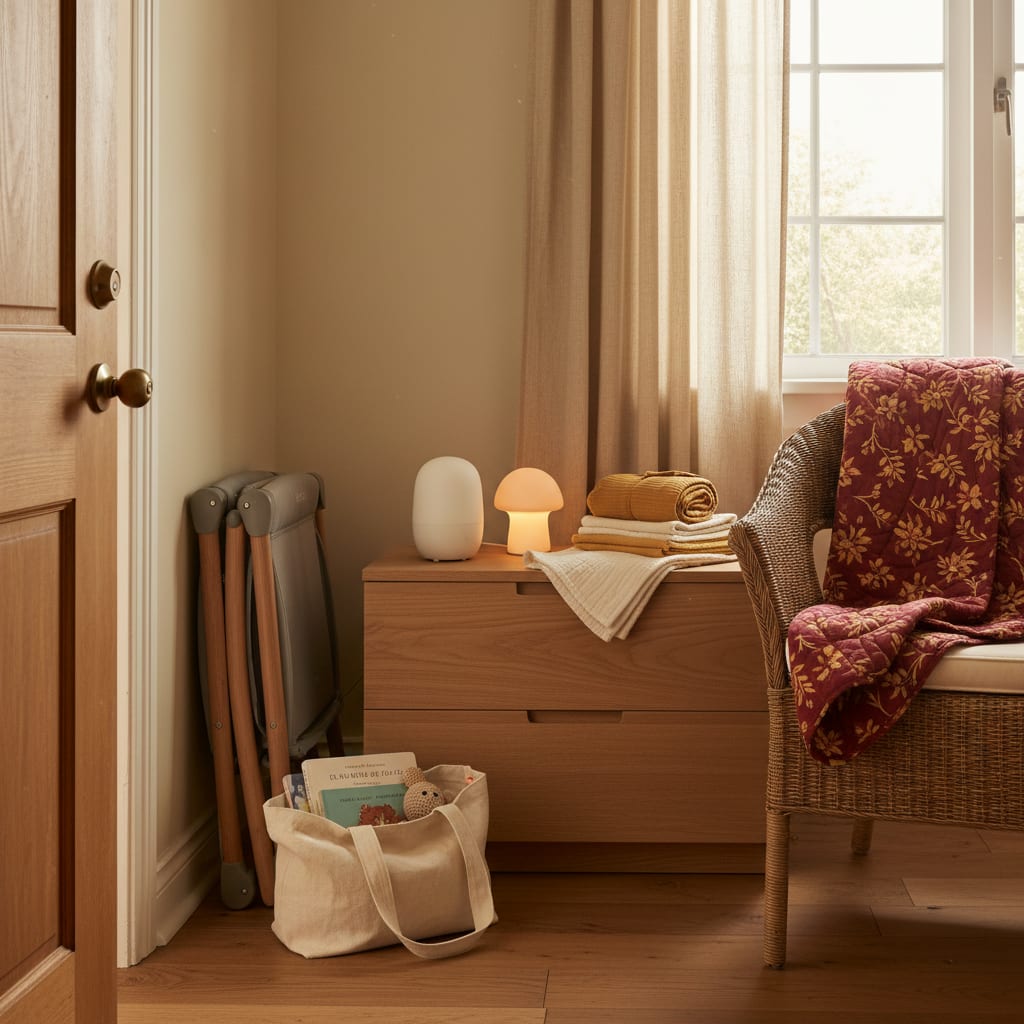
- A safe sleep space. One approved play yard or travel crib with a firm, snug-fitting sheet and nothing else in it. Ours is a portable crib that folds into a closet between visits.
- A place to change a baby. A changing pad on a low, wide surface — not on a table with a drop on three sides. Supplies within one-handed reach.
- A car seat, if you’ll be driving them. Get it installed and inspected properly, and learn to use it before the day you need it. If you’ll only drive occasionally, borrow the parents’ rather than buying.
- A high chair or clip-on seat, which you won’t need for months but will be glad to already own.
- Boring, useful comforts: a couple of cotton sleep sacks, a stack of muslins, a white noise machine for the room the baby will sleep in, a nightlight, and blackout coverage of some kind for the window.
- Basic baby-proofing of the room they’ll sleep in, at minimum: crib away from window-blind cords, nothing hanging above it.
The full room-by-room version, including where I got it wrong the first time, is in baby sleep at grandma’s house.
Resist the urge to buy more. The most common new-grandma mistake I see is a house furnished for a baby who visits four times a year, taking up space you’d rather have.
Two months out: update what you know
This is the part nobody puts on a checklist, and it’s the one that determines whether the parents relax when you hold the baby.
A great deal of newborn advice has changed since we did this. Babies sleep on their backs, on a firm flat surface, with nothing else in the space — no bumpers, no positioners, no blankets, no propping. Swaddling stops at the first sign of rolling. Rice cereal in the bottle is gone. The car seat isn’t a sleeping place once you’re out of the car. The guidance genuinely moved, and knowing the current version is how you stop being the person the parents watch nervously.
The other thing that’s new: many young families run an actual written sleep routine — timed naps, wake windows, a bedtime that shifts as the baby grows — rather than improvising. My daughter uses a personalized sleep-plan app that builds the day around the baby’s age, and the practical benefit for me is that “when’s the nap?” has a real answer on my phone instead of a guess. If you want to understand the shape of what they’re following before you’re standing in it, their explainer on what a newborn’s day actually looks like is a sensible half-hour of homework.
If the parents-to-be are white-knuckling this by instinct and it’s visibly wearing them down, the quiz that builds a plan makes a rather good grandma gift — it’s the rare baby present that’s really a present for their nights:

Two more pieces of homework: an infant CPR and choking course, which most hospitals and community centres run, and a look at your own vaccinations. Whooping cough boosters and flu shots for anyone around a newborn are standard advice now, and the parents will be grateful you raised it before they had to.
One month out: the practical bag
Pack a small bag and leave it by the door:
- Your phone charger, because you’ll be somewhere else for a while
- Comfortable clothes you don’t mind ruining
- A meal or two for their freezer, in containers you don’t want back
- Cash for parking, which is always more than you think
- Their house key, if you have one, and the alarm code written down somewhere
- A list of the older siblings’ schedules, if there are older siblings — this is where you’re most useful in week one
And a note on gifts: if you’re bringing something to the hospital, bring something for the parents. The baby is well supplied. What runs out is food, sleep and clean laundry. My full list is in best gifts for new parents.
The week itself: how to be the good one
Arrive when invited. Bring food. Ask “what needs doing?” and accept the answer, even when the answer is “nothing, please sit down.” Do the dishes without narrating it. Hold the baby when offered and hand the baby back the moment they want it back. Take photographs of the parents holding the baby, because nobody else will. Leave before you’re tired of being there.
And go home when you said you would. The visit that ends slightly too early is remembered fondly. The visit that ends slightly too late is remembered too.
FAQ: the new grandma checklist
What should a grandma buy before the baby is born?
Very little. A safe sleep space, a changing setup, a couple of sleep sacks and muslins, and a white noise machine cover almost everything. Buy the big items only once you know how often the baby will actually be at your house.
What should grandparents know before a baby arrives?
Current safe-sleep guidance — back to sleep, firm flat empty surface, no bumpers or positioners — plus whatever routine the parents are running. Refresh your infant CPR and check your whooping cough and flu vaccinations.
How long should a new grandma stay after the birth?
Exactly as long as the parents said they wanted, and not a day longer. Ask before the birth, agree a date, and hold to it. Offer to come back in a few weeks, when the initial crowd has cleared and the help is genuinely scarcer.
What do you say to your child when they become a parent?
Say you’re proud of them, say you’ll only give advice when asked, and mean the second one. That sentence, delivered early and honoured afterwards, buys you more access to that baby than anything you can carry through the door.
When should you choose your grandma name?
Before the birth. It gives the family months to get used to it and gives you time to coordinate with the other grandmother if you’ve both got your eye on the same one.