❋ Grandkid Time ❋
Gardening With Grandkids: Little Jobs They Love
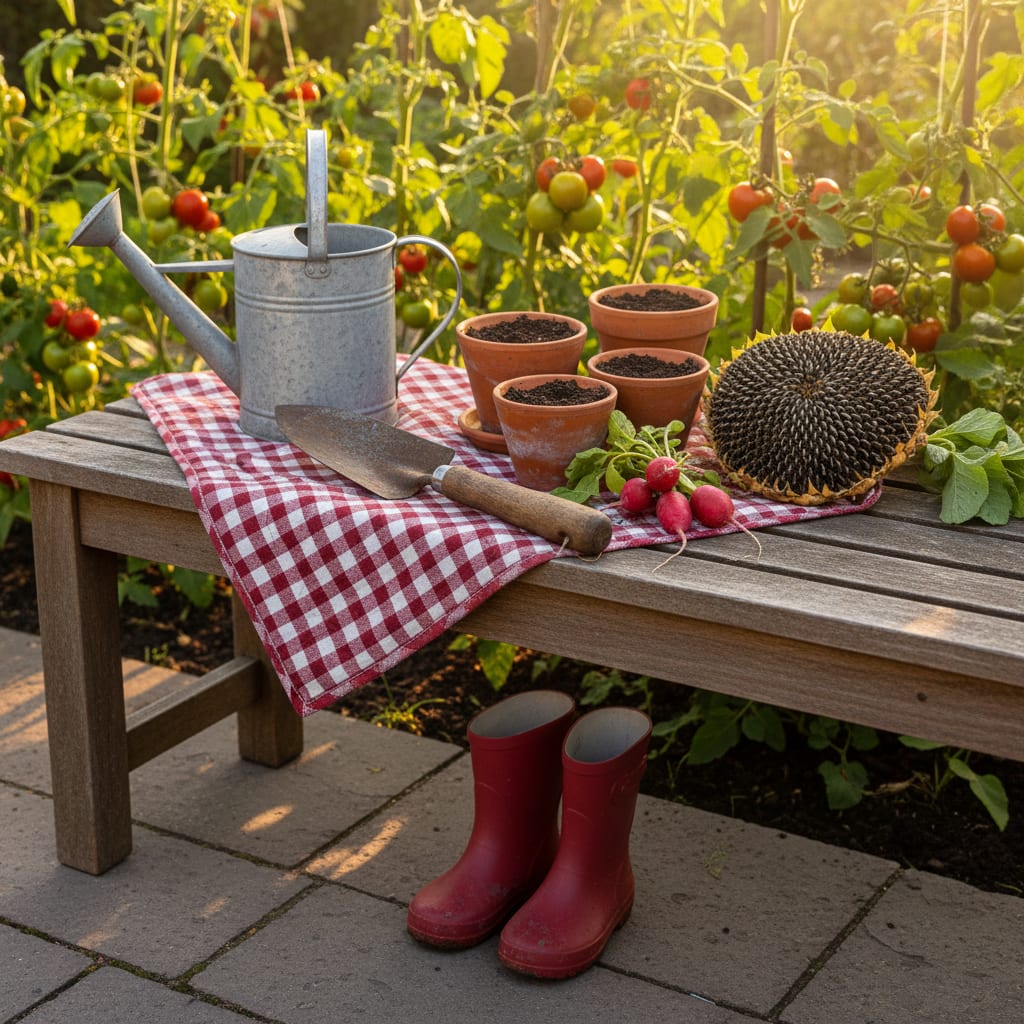
Gardening with grandkids works the moment you stop teaching and start delegating. Small children don’t want a lesson about photosynthesis; they want a job with a beginning and an end, ideally involving water, digging or carrying. Give a two-year-old a watering can and one pot to fill. Give a five-year-old the whole tomato harvest. The garden is the rare shared activity where the child is genuinely useful, the mess is already outdoors, and nobody has to be entertained. Here’s how it goes by age, what to plant, and the safety list I keep at my back door.
Why the garden beats the craft table
An indoor project has one moment of interest and then it’s finished. A garden has a next week. That’s the whole magic of it: a child who put a seed in the ground at your house has a reason to ask when they’re coming back, and a small stake in something that isn’t a screen or a toy.
It’s also forgiving of everything that makes activities with under-sixes hard. Nobody minds dirt on the floor. The activity scales down to five minutes and up to a whole afternoon. And a grandmother with a bad knee can sit on a bench and direct traffic entirely convincingly, which is more than can be said for an obstacle course.
Little jobs, age by age
- Ones. Filling and emptying a container of soil. Putting stones in a bucket. Patting earth flat. Genuinely, that is the activity, and a one-year-old will do it for twenty minutes.
- Twos. Watering — the great two-year-old vocation. Also carrying things from A to B, dropping big seeds like beans and sunflowers into holes you’ve made, and picking anything ripe and obvious.
- Threes. Deadheading spent flowers by pinching them off, sweeping a path with a small brush, gathering fallen leaves, planting bulbs into holes you’ve dug. Threes love a task with a visible before and after.
- Fours. Digging their own small holes, filling pots, harvesting beans and tomatoes, feeding the compost bucket, pulling weeds you’ve pointed at individually.
- Fives and sixes. A square of their own with genuine decision-making — what goes in it, when it gets watered, whether it worked. This is where a shared hobby actually starts, and my piece on hobbies to share with grandkids goes further into the apprentice stage.
The transferable rule: name the job, show it once, then leave. Hovering turns a job into a test.
Late summer is the entry point nobody uses
Everyone assumes gardening with children is a spring activity, and everyone therefore waits eight months to start. Mid-August is arguably the better beginning, because everything is already grown and a child’s first experience of a garden is picking things rather than waiting for them.
Right now there are tomatoes to hunt for under leaves, beans to snap off, sunflower heads going over with seeds to rub out into a bowl, and herbs to pick and smell. All of it is instant, all of it is edible or interesting, and none of it requires a four-year-old to understand delayed gratification.
Then, in the same visit, you plant the slow thing. Fall is when spring bulbs go in — daffodils, tulips, crocus — and a bulb is the perfect child’s planting job: big enough for clumsy fingers, impossible to plant wrong-side-up in any way that matters much, and it disappears completely, which makes March feel like a magic trick you did together.
What to plant if you want them to come back
Pick for speed, size and edibility, in that order.
Radishes are the classic for a reason — sowed to pulled in about a month, and a child who plants a seed and eats the result is converted for life. Sunflowers because they get taller than the child, which is the single most compelling fact in gardening if you are four. Cherry tomatoes in a pot, because they keep producing and a warm one eaten off the vine is a genuinely persuasive vegetable. Beans because the seeds are huge and easy for toddler hands. Mint or lemon balm in a container of its own — cheap, indestructible, and it smells like something when you crush a leaf, which is half of what small children want from a plant.
What I’d skip: seeds so fine they can’t be handled, anything that takes a whole season to show anything, and — for the parents’ sake — nothing that produces a crop the parents then have to deal with in quantity. Send home a handful of tomatoes, not a grocery bag of zucchini.
The safety list at my back door
The garden is the part of my house I re-checked most carefully once grandchildren started visiting, and it deserves the same attention I gave the indoors in toddler-proofing grandma’s house.
- Know what’s growing. Several very common garden plants are poisonous if eaten — foxglove, lily of the valley, yew and oleander among them. Walk your own beds and find out what you’ve got. If a child ever swallows part of a plant, call the Poison Control helpline or the child’s doctor rather than looking it up and guessing.
- Water is the serious one. A small child can drown in a very shallow amount of water. Empty buckets and kiddie pools when you’re done, and treat a pond or rain barrel as something that needs a lid or a barrier, not just supervision.
- Lock the shed. Slug bait, weed killer, fertilizer, sharp tools and lawnmower fuel all live behind a latch a three-year-old cannot work.
- Everything gets washed. Hands after digging, produce before eating, and no eating anything straight off the plant until you’ve said which plant is the eating one.
- Sun and boots. Hat, sunscreen, closed shoes. And check with the parents about anything they’re already using — sunscreen is one of those areas where they may well have a rule you don’t know about.
Tools worth buying, and the ones that aren’t
Plastic pretend tools break in a week and a child can tell they’re not real. Buy small and functional instead.
A basic four-piece set like the Play22 kids’ garden tools — shovel, rake, hoe and leaf rake with wooden handles — covers essentially every job on the list above and lives in a corner of the shed between visits. A child-sized watering can matters more than you’d think, because a full adult can is too heavy to carry and the carrying is the point. And if you have somewhere to store it, a real steel kids’ wheelbarrow turns every tidying job into transport, which is the job three-year-olds like best of all.
Skip the seed-starting kits with tiny cells, the gardening gloves in child sizes that never fit, and anything sold as a “children’s garden set” that’s mostly packaging. A watering can, a trowel and a patch of dirt is the whole entry fee.
For the days when the weather closes in on all of this, the energy-sorted list in activities for grandparents and grandchildren has the indoor equivalents.
FAQ: gardening with grandkids
What’s the youngest age for gardening? Around eighteen months, once they can carry something and follow a one-step instruction. Before that they’re happy to sit and transfer soil between pots, which is fine but is really sensory play rather than gardening.
I only have a balcony. Is it worth it? Yes. Three pots — one herb, one cherry tomato, one flower — gives a child everything the activity is actually for: a job, a reason to come back, and something to eat.
How do I stop them pulling up what they’ve just planted? Give them a designated digging patch that is theirs to wreck, right beside the beds that aren’t. Small children need somewhere to dig freely far more than they need to respect your seedlings.
They lose interest after five minutes. Am I doing it wrong? No — five minutes is a normal attention span for a three-year-old, and the fix is more jobs rather than longer ones. Water the pots, then look for ladybirds, then come in. The garden isn’t ruined by a short visit.
What if the parents don’t want them eating from the garden? Follow it without argument. Pick into a bowl, wash it at the sink, and let the parents decide at home. It costs you nothing and keeps the garden a place they’re happy to send the children to.