❋ Grandkid Time ❋
Why the Baby Settles for Grandpa and Not for Grandma
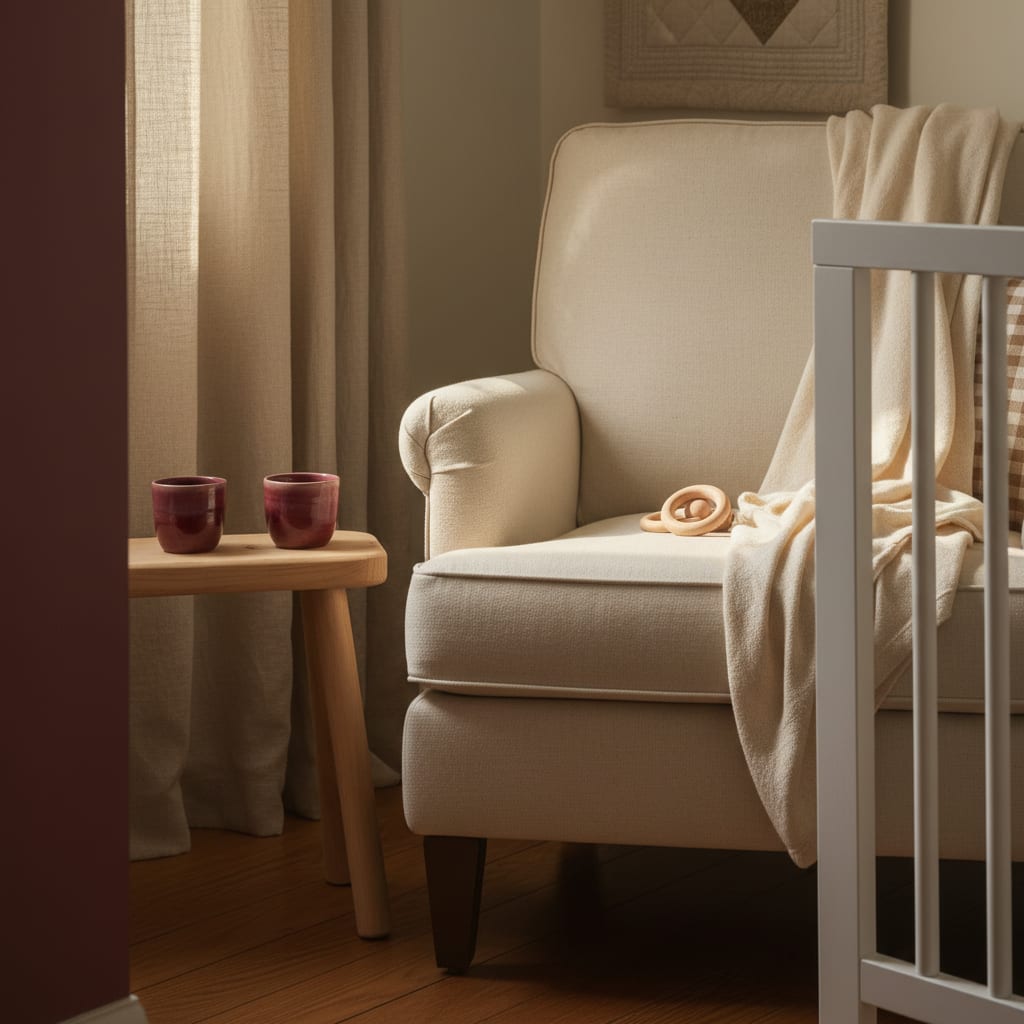
If the baby goes down in ten minutes for your husband and screams for forty in your arms, the cause is almost never the one you fear. Babies settle for whoever has settled them most, in the way they were settled last time — it is a learned association, not a verdict on who is loved. The fix is not to try harder in the moment. It is to stop being the person who hovers, take a small number of low-stakes turns in a row, and copy the successful adult’s sequence so exactly that the baby cannot tell the difference. Here is how that works in a real house.
It is practice, not preference
A baby under two is not choosing a favourite grandparent the way a seven-year-old chooses a favourite colour. She is recognising a pattern: this hold, this noise, this room, and then sleep happens. Whoever produced it most often becomes the reliable one, and everybody else is an experiment she is too tired to run.
That is why the “preferred” grandparent is so often the one who does the boring shift. In our house it was my husband, purely because he did the 2 p.m. Wednesday nap for eleven weeks running while I was still working. He is not calmer than me and he is not better with babies. He had eleven more repetitions, and repetitions are the whole currency.
It is also why the preference can flip in a fortnight. I have watched a grandchild switch allegiance twice in one summer; if it were about love, it would not move that easily.
What the settling grandparent is actually doing differently
When I finally watched properly instead of sulking, the difference came down to four unglamorous things — and all four are copyable.
- He starts earlier. He reads the first yawn, not the third. A baby put down before she is overtired settles for almost anybody; a baby put down twenty minutes late settles for almost nobody.
- He does less. One hold, one slow walk to the window, one low hum, down. I was running a variety show — three positions, two songs, a change of room — and every change resets the clock.
- He is boring after the last step. He puts her down and stops. No stroking, no last kiss, no “shhhh” escalating in volume. The end of his routine is genuinely the end.
- He does not rescue at the first noise. A baby who grumbles for ninety seconds and is picked up has just learned that grumbling ends the nap. He waits. I never did.
None of that is temperament. It is a sequence, and a sequence can be borrowed. This is the same lesson as matching the parents’ nap plan on your own days: copy the order of operations before you change anything about the atmosphere.
Where I was the reason it kept happening
Here is the part nobody says out loud at the family lunch. For about six weeks I was actively making it worse, in three specific ways.
I hovered. When he took her upstairs I stood at the bottom of the stairs, and twice I came up “just to check.” The AAP’s own advice on goodbyes applies exactly here: keep the goodbye short and sweet, because if you linger, the transition time does too. A second adult visible in the doorway is not neutral. She is an option.
I made myself the court of appeal. Any baby who learns that fussing summons a different, softer adult will fuss, every time, sensibly. That is not manipulation; it is a nine-month-old correctly identifying the better offer.
And I took my turns in the worst slot available — the bedtime after a missed nap, the visit where she was teething. Of course I failed. I had chosen the hardest exam available, then read the result as a referendum on me.
How to take your turn without wrecking the nap
Four rules, learned the hard way.
- Ask for an easy slot. The first nap of the day, at home, on an ordinary Tuesday. Not bedtime, not at a party, not the first night of a visit.
- Take three in a row. One turn proves nothing and teaches nothing. Three consecutive same-time naps is where the pattern actually starts to move.
- Copy his sequence exactly, then change one thing at a time. Same room, same order, same lights, same hold. Once she goes down for you twice, you may substitute your own song. Not before.
- The other grandparent leaves the floor. Physically. Different room, door shut. This is the single highest-value change and the one most couples skip.
If you only do one of those, do the fourth. And if the parents have a plan already, it wins — their baby, their rules, my cookies. Everything else in this house is negotiable; that is not.
When it is the other grandmother
Same mechanism, different feelings. If the baby settles for her and not for you, the arithmetic is usually geography: she lives twenty minutes away and you live four hours away, so she has three hundred repetitions and you have nine.
Nothing about that is fixable by trying harder on the one weekend you get. What is fixable is making your nine repetitions identical — same hold, same song, same order, every visit. Consistency across long gaps beats intensity inside a short one. The related trap is different but worth knowing: a baby can adore you at Sunday lunch and still howl when the parents leave, and that is a separate phenomenon with a separate cure.
It is also worth expecting some of this on developmental grounds rather than personal ones. Most babies build real separation anxiety around nine months, and plenty of toddlers who sailed through infancy start objecting loudly at fifteen or eighteen months instead — and that clingy stretch tends to show up at nap time and bedtime first, which is precisely where you were trying to prove yourself.
The one thing that does not change hands
Whichever grandparent wins the settling contest, the floor underneath it is identical. Every sleep on the back, in her own space — crib, bassinet or play yard — on a surface that is firm, flat “like a table, not a hammock,” level, and covered only with a fitted sheet, nothing else in with her.
And the specific risk for the grandparent who is winning: NICHD names couches and armchairs as particularly dangerous when an adult falls asleep on them while feeding or comforting a baby. The successful settler is exactly the person most likely to doze off mid-cuddle at four in the afternoon. If he is the one who always gets her down, he is the one who needs that sentence read to him. Why these rules changed since our own babies is laid out in safe sleep rules for grandparents, and the practical setup at your house in baby sleep at grandma’s house.

FAQ: when a baby settles for one grandparent
Why does my grandchild only settle for my husband?
Almost always because he has done it more often and does it the same way every time. Babies attach sleep to a repeated sequence, not to a personality. Copy his exact order — room, hold, sound, put-down — and take three turns in a row before you judge the result.
Does it mean the baby loves the other grandparent more?
No. Under two, settling preference tracks practice and predictability, not affection. It also moves: plenty of families see the preferred adult swap over a few weeks with nothing having changed except who happened to do the naps.
Should I stay in the room to help?
No — that is usually what keeps it going. A second adult in the doorway gives the baby someone to appeal to, and a lingering goodbye lengthens the settling rather than shortening it. Hand over and leave the floor entirely.
How long before a baby will settle for me too?
Think in repetitions rather than days. Three consecutive naps in the same easy slot is where most families see the first change; a genuinely reliable second settler usually takes a few weeks of regular turns.
What if I only see the baby occasionally?
Make your handful of turns identical rather than trying to match the everyday grandparent’s total. Same hold, same song, same order, every visit — consistency across long gaps is what a baby recognises.