❋ Grandkid Time ❋
Care Package Ideas Grandkids Rip Open First
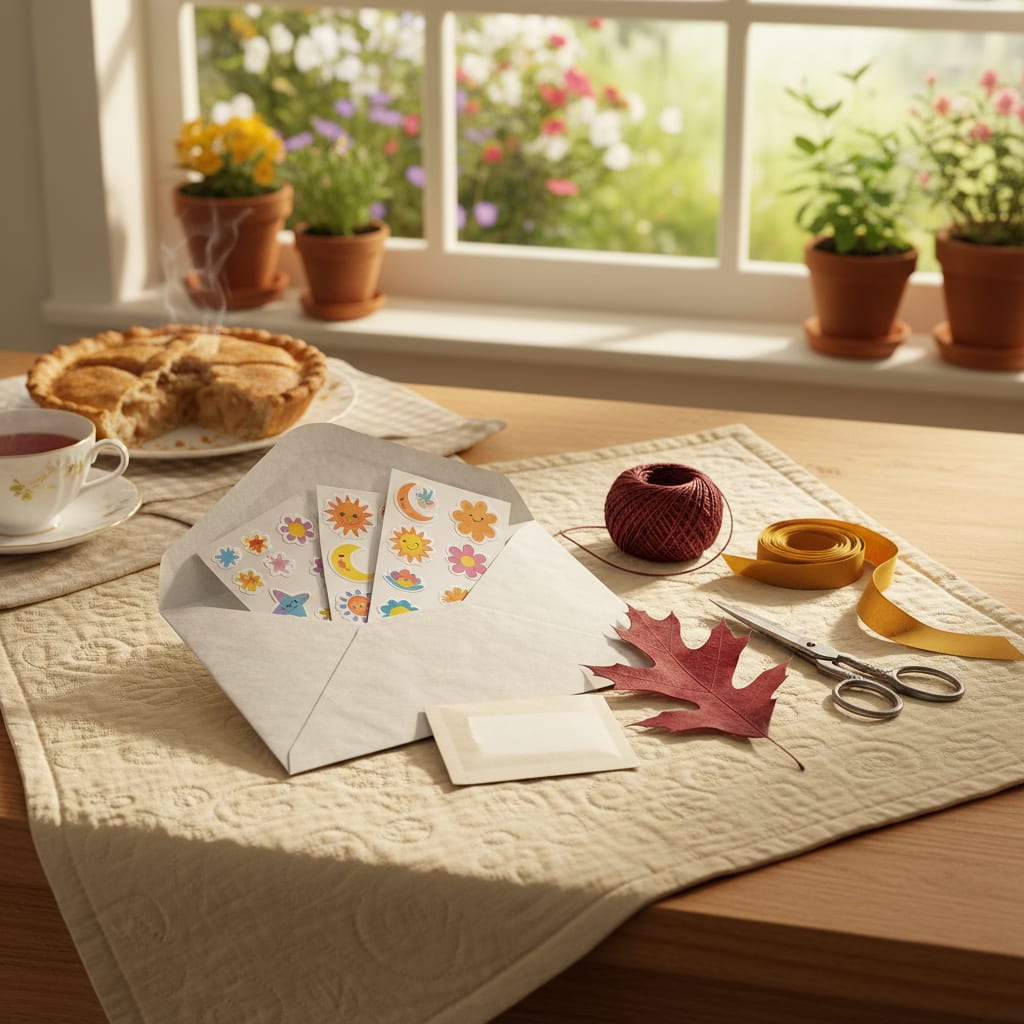
The best care package for a grandchild is small, cheap, mostly consumable, and arrives often. A padded envelope with stickers, a postcard and a packet of seeds beats a giant box four times a year — because a small child measures a parcel by how fast they can open it and how soon the next one comes, and because a parent measures it by how much floor space it costs them. Send flat, send frequently, and put the child’s own name on the front. That last detail does more work than anything inside.
The three rules that keep parents on your side
1. Nothing that needs floor space. No ride-ons, no play kitchens, no anything requiring assembly, unless it was specifically requested. A parcel that becomes a furniture problem is a parcel that makes the next one less welcome.
2. Nothing loud, unless you’re prepared to hear about it. The drum, the siren, the thing that sings when it’s kicked under the sofa at 3am. I’ve done it. It’s funny once.
3. Consumable is a compliment. Stickers get used up. Paint runs out. Seeds get planted. Things that disappear are the ones you can send every month forever without anybody’s house filling up.
To which I’d add a fourth, learned the hard way: address it to the child. A five-year-old receiving actual post with their own name on it is having a genuinely large experience.
Babies (0–1): send it to the parents, really
A baby has no idea a parcel exists. Send anyway — for the parents, and for the photographs you’ll get back.
- A lovey, once it’s allowed. Small comfort objects don’t go in the crib as early as people assume, so time it with the parents rather than the birthday; Betteroo’s rundown of when a lovey is safe for sleep sets out the age most families work to.
- The next size up in clothes. Not the current size — parents are drowning in the current size.
- A board book with the date written inside the cover.
- Something for the mother in the same box. Nice tea, hand cream, chocolate she doesn’t have to share. My full list is in the postpartum gift basket post, and it applies well past the fourth-trimester stage.
Toddlers (1–3): flat, sturdy, immediate
At this age the parcel itself is fifty per cent of the fun. Don’t over-wrap.
- Chunky stickers, a lot of them.
- Bath crayons or bath fizzers.
- A mess-free water-reveal colouring pad. If you buy two and keep one, it doubles as a shared video-call activity, which is the trick I lean on in video call activities grandkids won’t wander off from.
- A photograph of you, printed, and one of your dog or your garden.
- Snack packets in a flavour they can’t get locally.
- A balloon, flat, in the envelope. Costs nothing, causes joy.
Preschoolers (3–5): make it a project
This is the age where a care package can be a whole afternoon rather than a two-minute unwrapping.
- A “kit” rather than a toy. Five envelopes numbered one to five, each with a small task inside. Paper chains. A pressed-flower set with tissue and a note of what to press.
- Seeds and a folded paper pot. Sunflower or cress; both are fast enough for a four-year-old’s patience.
- Craft supplies with an obvious use — googly eyes, pipe cleaners, a roll of washi tape, a set of paints in a tin that shuts.
- A book about being apart. The Invisible String is the one I keep buying for far-away grandchildren; it gives a small person language for missing someone, which is worth a great deal at four.
- Half of something. You keep half, they keep half — half a friendship bracelet, half a pack of stickers. It creates a next time.
Fives and sixes: give them a reason to write back
- A stamped, addressed envelope inside the parcel. The best thing I ever posted. Put your own address on it, add a sticker, and see what comes back.
- A collection to build. Send one postcard a month from wherever you go, or one shell, or one badge. Collections are the great long-distance grandparent technology: they create anticipation between parcels rather than only at them.
- A joke, a riddle, and the answer sealed in a second envelope.
- A recipe card in your handwriting, with the dry ingredients measured into a little bag.
- A treasure hunt by post — the first clue in the envelope, the rest emailed to a parent to hide.
The little envelope I send most months
If it helps, here’s my actual standing order, which takes ten minutes and about the price of a coffee: one sheet of stickers, one photograph, one seasonal object from outside (a leaf, a conker, a feather), three sentences on a postcard in large clear letters, and a joke. It goes in a padded envelope. It costs almost nothing and it arrives roughly every three weeks.
Nothing in it is impressive. That’s the point — an impressive parcel raises the bar and makes the ordinary ones feel like a let-down. Small and reliable is the same principle that makes the whole long-distance grandma approach work, and it’s why I’d rather send twelve envelopes than two boxes.
When to send something bigger
Save the substantial gift for birthdays and Christmas, ask the parents first, and ask them a specific question — “is there a gap they’d like filled?” — rather than a general one. If you want the gift-guide version of this thinking for the whole family, the best gifts for new parents list is where I keep the bigger-ticket recommendations.
FAQ: care packages for grandkids
What should I put in a care package for a grandchild?
Small, flat, consumable things: stickers, art supplies, a book, snacks, a photograph, something from outside. Address it to the child, keep it cheap, and send it more often rather than making it bigger.
How often should I send parcels to grandchildren?
Monthly is plenty, and every three weeks is lovely. The rhythm matters more than the contents — a child who knows a parcel is roughly due has something to look forward to between visits.
What should I not send to my grandchildren?
Anything large, loud, battery-powered, or needing assembly; sweets in quantities the parents haven’t agreed to; and anything that makes a mess the parents will be cleaning up. When in doubt, one quick text to the parents solves it.
How do I make a care package feel special without spending much?
Personalise rather than upgrade. Handwriting, a photograph, something from your own garden and their name on the envelope are worth more to a small child than anything you could add by spending more.
Is it worth sending parcels to a baby who won’t remember?
Yes, for the parents’ sake and for your own. Keep them tiny and useful at that age — the relationship you’re building for later is with the whole household, not just the baby.