Meeting Your Grandchild: What to Bring & Say
Bring food, bring your hands, and bring almost nothing else. When you meet your grandchild for the first time, the useful grandmother arrives with something the parents can eat one-handed, says a version of “she’s perfect and you did that,” holds the baby only when offered, and leaves before anybody has to hint. Gifts, opinions and photographs all come later. The first meeting is not an event you attend — it’s the first favour you do for two exhausted people, and how you handle it sets the tone for years of visits after it.
Before you go: three questions to ask, once
Ask them by text, ask them once, and take the answer as final.
- When would you like me? Not “when can I come” — the phrasing matters. Some families want a grandmother in the hospital within hours; plenty now want the first week to themselves. Both are normal.
- How long should I stay? Offer a number first so they don’t have to: “I’ll come for forty minutes and then get out of your hair.”
- What can I bring — and what are you sick of? By day three there are usually eleven muslins and no dinner.
Then confirm the practical bits: who else is visiting that day, whether photos are going anywhere, and whether they want you to bring the older sibling. If you want the longer version of the etiquette, it’s all in rules for visiting a newborn — the hospital and the first fortnight are genuinely different visits with different rules.
What to actually bring
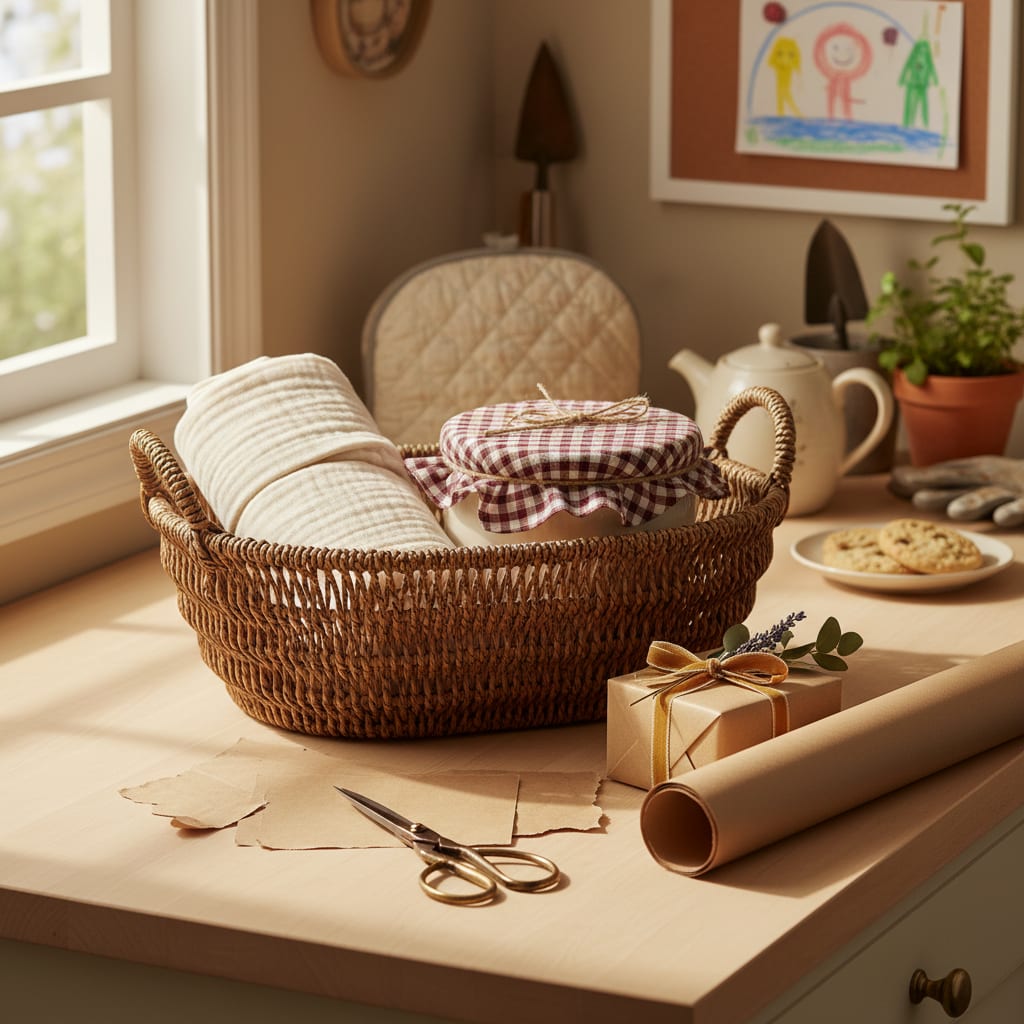
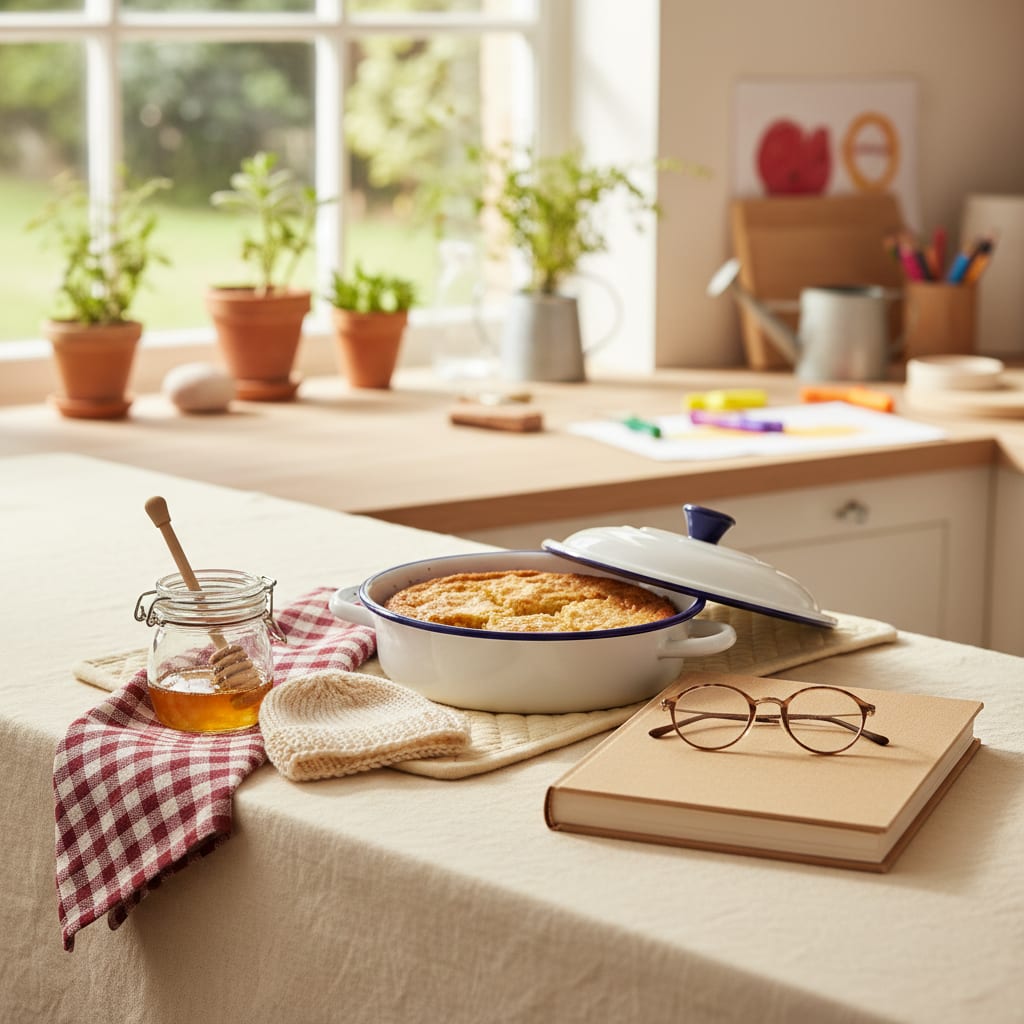
Food that survives being ignored. A tray bake, a labelled freezer container of soup, a bag of decent coffee, a box of the good crackers. Not a hot meal that has to be eaten at seven o’clock — a new family cannot promise you seven o’clock. If you bring one thing, bring breakfast: cut fruit, yoghurt, something that can be eaten standing at a counter with a baby on one arm.
Something for the mother, not the baby. Lip balm, hair ties, nice hand cream, a phone charger with a very long cable. Everybody sends a onesie; almost nobody sends the woman who just gave birth a single thing that is hers. If you’re building something bigger, my postpartum gift basket list is the whole argument, expanded.
Something for the older sibling, if there is one. A small toy in your bag on the day the baby arrives buys a two-year-old’s goodwill for a week and buys the parents an hour.
One keepsake, and only one. If you want to give the baby a thing, make it a thing that lasts: a book you’ll be reading aloud for four years, with the date and your grandma name written inside the cover. On the Night You Were Born in board-book form is the one I’ve handed over five times now — it survives teeth, and it means something the fifteenth time as well as the first.
Your reading glasses. Trust me.
What to say — and the sentences to retire
The first thing out of your mouth gets remembered, so aim it at the parents, not the baby.
- “You did an amazing job.” (To her, first, before you look at the baby.)
- “He’s beautiful. He looks like himself.”
- “What can I do while I’m here?” — then do it without narration.
- “I’m so proud of you both.”
- “Tell me what you need and I’ll believe you.”
And the ones to leave in the car:
- “In my day we…” — nothing good follows.
- “Are you sure she’s getting enough?” Feeding is the single most tender subject in that room.
- “You were a terrible sleeper too.” Save it for month four, when it will be a comfort rather than a prophecy.
- “Well, when I had you…” — see above.
- Anything at all about the birth that they haven’t offered first. If they want to tell the story, they’ll tell it. Your job is to look at their face while they do.
If you want a whole vocabulary of steady, non-fixing things to say in that first fortnight, Betteroo’s collection of things worth saying to brand-new parents is a better script than instinct, because instinct at that moment is mostly your own memories talking.
Holding the baby: wait to be offered
You will want to hold them so badly your arms will ache. Wait anyway.
Wash your hands to the wrist before you’re asked. Don’t kiss the baby’s face — no grandmother in 2026 gets to argue this one, and it isn’t personal. Hold them upright against your shoulder rather than jiggling them about, and hand them back the moment they root, fuss, or the mother’s eyes go to them. Handing a baby back early is the single most reassuring thing a new grandmother can do; it says I know whose baby this is.
If you’re unwell, or you’ve had a cold in the last week, say so and stay away. It will cost you three days and earn you a decade of trust.
Leaving well is the whole trick
Set an alarm on your phone if you must. Stand up while everyone still wishes you’d stay, do one visible useful thing on the way out — load the dishwasher, take the bin, fold the towels — and say the magic closing line: “I’ll come back whenever you want me. Text me when it suits, and I won’t be offended if it’s a fortnight.”
Then, at home, don’t post the photograph. Ask first, every time, and accept no as a whole answer.
The visits after this one
The first meeting is short and emotional. The visits that build the relationship are the boring ones after it — the Tuesday you hold the baby for ninety minutes so somebody can shower and sleep. What to do with those is in grandparents’ first visit after birth, and if the baby hasn’t arrived yet, the new grandma checklist is what I’d want in my hands about now.
FAQ: meeting your grandchild for the first time
How soon should grandparents meet a new baby?
Whenever the parents invite you, which may be hours or may be a fortnight. Ask once, offer to come later rather than sooner, and let a delay mean nothing more than a delay.
What should I bring when I meet my grandchild?
Food the parents can eat with one hand, one small thing for the mother, something for an older sibling if there is one, and at most a single keepsake for the baby. Leave the balloons and the giant bear.
Can I kiss my new grandchild?
Not on the face. Newborn immune systems are new to the job, and the current advice — which every parent has read — is no face kisses from visitors. Kiss the top of the head or the feet if you must.
How long should a first visit last?
Twenty to forty minutes at the hospital, an hour at most at home. Announce your leaving time when you arrive; it removes the awkwardness for everybody.
What if the parents ask me not to visit yet?
Say “of course, take all the time you need” and mean it. A grandmother who accepts the first no gracefully is the grandmother who gets called first for everything afterwards.