To sleep well when the grandkids stay for the holidays, keep your own wake-up time every day of the visit, even if the house is up at five. Agree with the parents before anyone arrives on who takes the early mornings, and take your share, not all of them. Nap for about twenty minutes before three in the afternoon. Keep one room that is yours after dark. And if you’re still lying awake a week after they go home, tell your doctor rather than reaching for something at the pharmacy.
Why a full house is hard on a grandmother’s sleep
I love a full house at Christmas. I also know what it costs, because the year all five grandchildren came for nine nights I was asleep in my chair at the lunch table the day after Christmas.
Some of that is age. The National Institute on Aging’s page on sleep and older adults says older adults need about the same sleep as all adults, “seven to nine hours each night,” but that our sleep “tends to be shorter and lighter, and you may wake up more often during the night.” A toddler padding past your door at 5:10 breaks exactly that kind of sleep.
The same page says short-term insomnia “can be caused by stress or changes to routine.” A long holiday visit is both. The kitchen runs till ten and the grandchildren run from six. That is not a reason to cancel. It is a reason to plan for yourself the way you plan for them.
Keep your own wake-up time, whatever the house does
The NIA’s first tip is to go to sleep and get up “at the same time each day, even on weekends or when traveling.”
The trap is the swing: up at five with the little ones on Monday, asleep till nine on Tuesday because the parents took the morning, and by Thursday your body has no idea when the day starts. Hold your usual getting-up time on duty days and off days alike. Your bedtime has to hold too, so I leave the grown-ups’ evening early most nights, and say so at dinner so nobody thinks I’m sulking.
Trade the early shift with the parents before the visit
My post on Christmas morning at Grandma’s covers the grandchildren’s side of early waking. This is yours. Before the visit, settle three things with the parents:
- Who is on the early shift each morning. Alternate, and agree it out loud so nobody lies awake wondering whose turn it is.
- Where an early child goes. In our house, the kitchen with the lights low, not my bedroom door.
- What the child’s own signal is. Many families use a color-changing toddler clock. If theirs does, ask them to pack it and keep the home setting. Betteroo’s guide explains how those clocks are meant to be used, and its point that a clock “is a tool, not a cure” matches what I’ve seen. If they want to try one, the LittleHippo Mella is one option, but buy it only if the parents say yes. It’s their rule, not mine.
If they’re up before six every morning of the visit, have a quiet word with the parents. Betteroo has a clear piece on the usual reasons a small child starts the day before six, and a late bedtime is high on it, which holiday evenings make easy.
Nap like a grown-up, not like a grandchild
By the third afternoon I want to lie down when the baby does. That’s fine, with two limits. The Sleep Foundation’s article on napping says “the best nap length for adults is about 20 minutes and no longer than 30 minutes,” and that experts usually suggest napping at least eight hours before bedtime, which, it says, means “napping before 3 p.m.” for most people. It also notes that for older adults, napping during the day is linked with waking more often at night. The NIA says the same thing more bluntly: avoid napping in the late afternoon or evening.
So I set the stove timer for twenty-five minutes, lie on top of the covers, and get up when it rings. The two-hour collapse at four is the nap that costs me the night.
Keep one room that is yours after dark
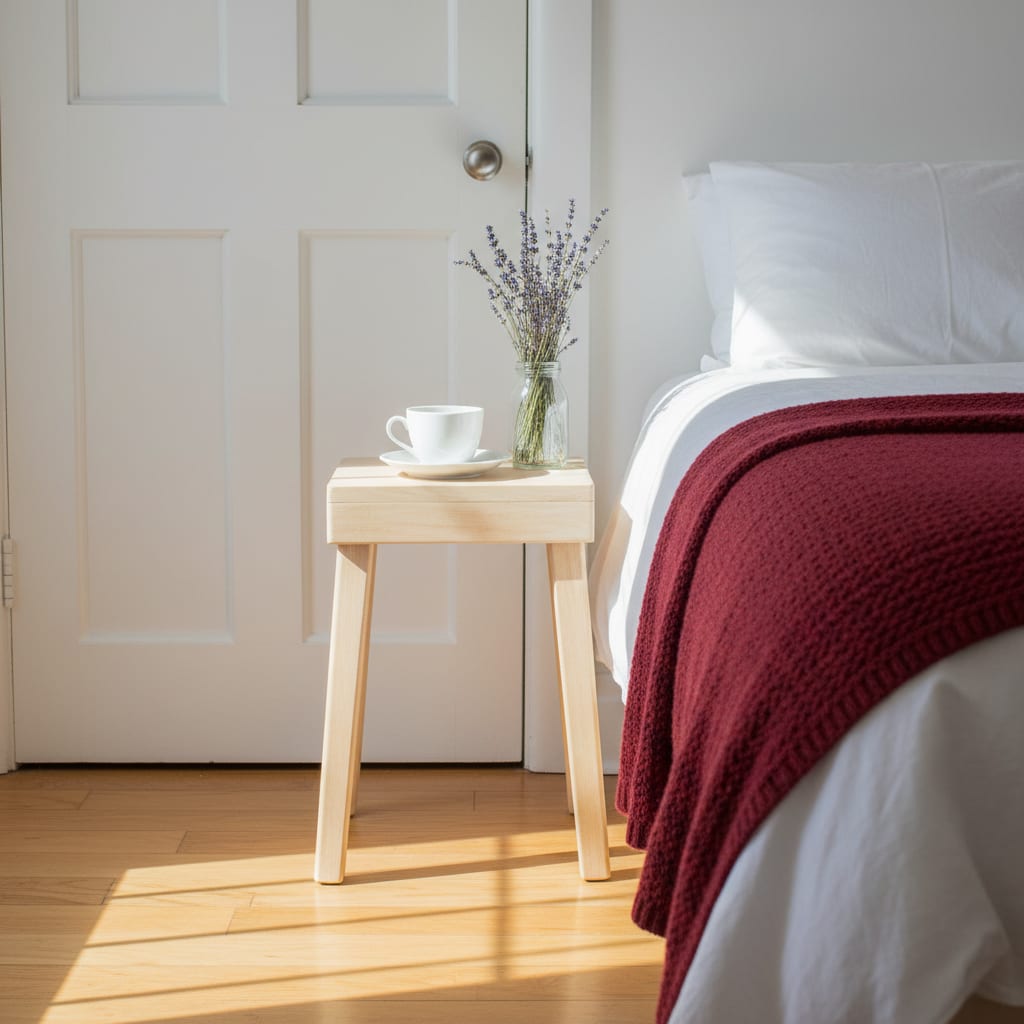
In a full house every room fills up. Mine doesn’t. When the grandchildren visit, my bedroom is not a coat room, a nap room or the place the baby monitor lives, and I say so plainly.
Then make it quiet. A pair of Mack’s Pillow Soft silicone earplugs lives in my bedside drawer for the nights the parents are on duty, and a Yogasleep Dohm Classic covers the creak of the stairs on the nights they aren’t and I want to hear a cry. The NIA also says to keep the room not too hot or cold, and a crowded house runs warm. If you’re the one on duty overnight, skip the earplugs. Only one adult needs to be listening, and the plan should say which.
Watch the holiday habits that cost sleep
The NIA’s list reads like a family Christmas:
- Caffeine late in the day. It lists coffee, tea, chocolate and soda. I switch to decaf after lunch for the visit.
- Alcohol. The page says to avoid it, “even small amounts.” I won’t lecture anyone about Christmas wine, but if you’re sleeping badly, look there first.
- Big meals and big drinks late. It suggests no large meals within two to three hours of bed, and no large amounts of liquid late in the day. On the long days, eat the big meal at lunch, as my mother did.
Make the night walk safe
A house full of grandchildren has things all over the floor. The NIA’s sleep-safety list includes a nightlight in the hallway or bathroom and removing rugs and cords you could trip over if you wake in the night. Before bed I do a quick toy sweep of the route from my bed to the bathroom, and I put Emotionlite dusk-to-dawn night lights in the upstairs hall for the visit.
The grandchildren’s nights run on the parents’ plan; my sleep plan for a week at grandma’s house covers theirs. If you’re the one traveling, the night-shift questions in when Grandma stays to help work just as well for a holiday stay.
 A calmer house starts with their bedtime
Betteroo builds an age-based sleep plan the parents can share with Grandma, so the whole household knows when the little ones go down and when the day begins.
Take the sleep quiz →
When it’s more than a tired week
A tired week usually settles once the house goes quiet. If it doesn’t, the NIA suggests keeping a sleep diary for a couple of weeks (bedtime, waking, caffeine, alcohol, exercise) to take to your doctor. It also says sleep medicines “may help in the short term, but they carry risks and should not be used long term,” so see the doctor before the pharmacy aisle. Snoring, or someone noticing that you stop breathing for a few seconds in your sleep, is worth mentioning too; the NIA describes both under sleep apnea.
FAQ: grandma’s sleep during a holiday visit
How much sleep does a grandmother need during a busy visit?
The same as the rest of the year: about seven to nine hours a night, according to the National Institute on Aging.
Is it all right to nap while the grandkids nap?
Yes, if it’s short and early: the Sleep Foundation suggests about 20 to 30 minutes, before about 3 p.m. for most people.
What if I still can’t sleep after everyone has gone home?
Give it a few nights, then keep a simple sleep diary and talk to your doctor rather than starting a sleep aid on your own.