Grandparents' First Visit After Birth: Get Invited Back
The grandparents’ first visit after birth goes best when you follow three rules: come when invited (not when the baby comes), stay short unless asked to stay long, and arrive as staff, not as a guest. Bring food, do a chore without being asked, hold the baby only when offered, and leave while they’re still sorry to see you go. That’s the whole formula — everything below is just the details, learned across five grandchildren and a few early mistakes I’ll own up to as we go.
Wait for the invitation (yes, really)
The hardest part of the first visit happens before it: the waiting. The baby arrives, your heart detonates, and every cell in your body wants to drive to the hospital. Don’t — not until the parents say when. Some families want grandparents in the delivery-day waiting room; others want two weeks of cocooning first. Both are normal, neither is about you, and the couple that gets to decide is the one that just had the baby.
I know the ache. When my first grandchild was born I had a bag packed by the door like a volunteer firefighter. But asking “when works for you?” instead of announcing an arrival time is the opening move of the next eighteen years of being trusted — and the fastest way to get invited back is to be easy to invite the first time.
What to bring (food outranks flowers)
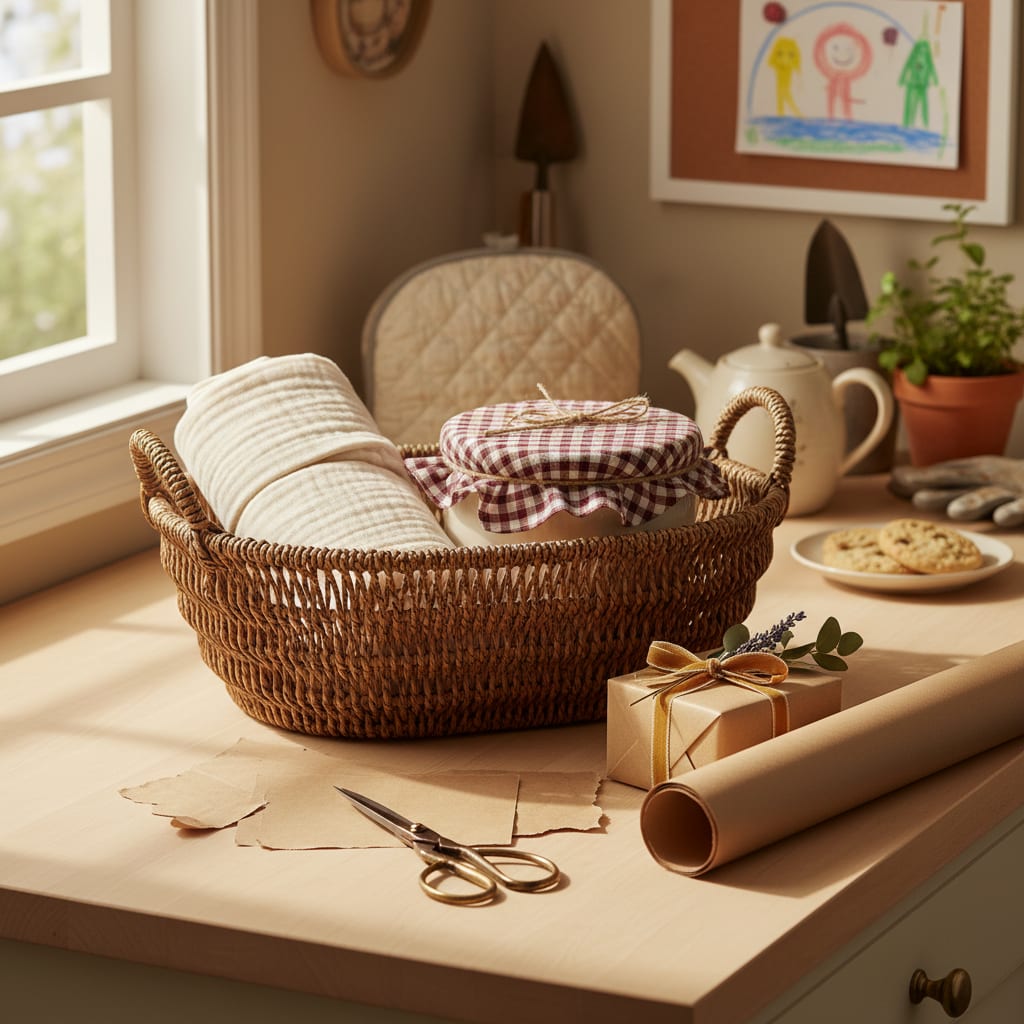
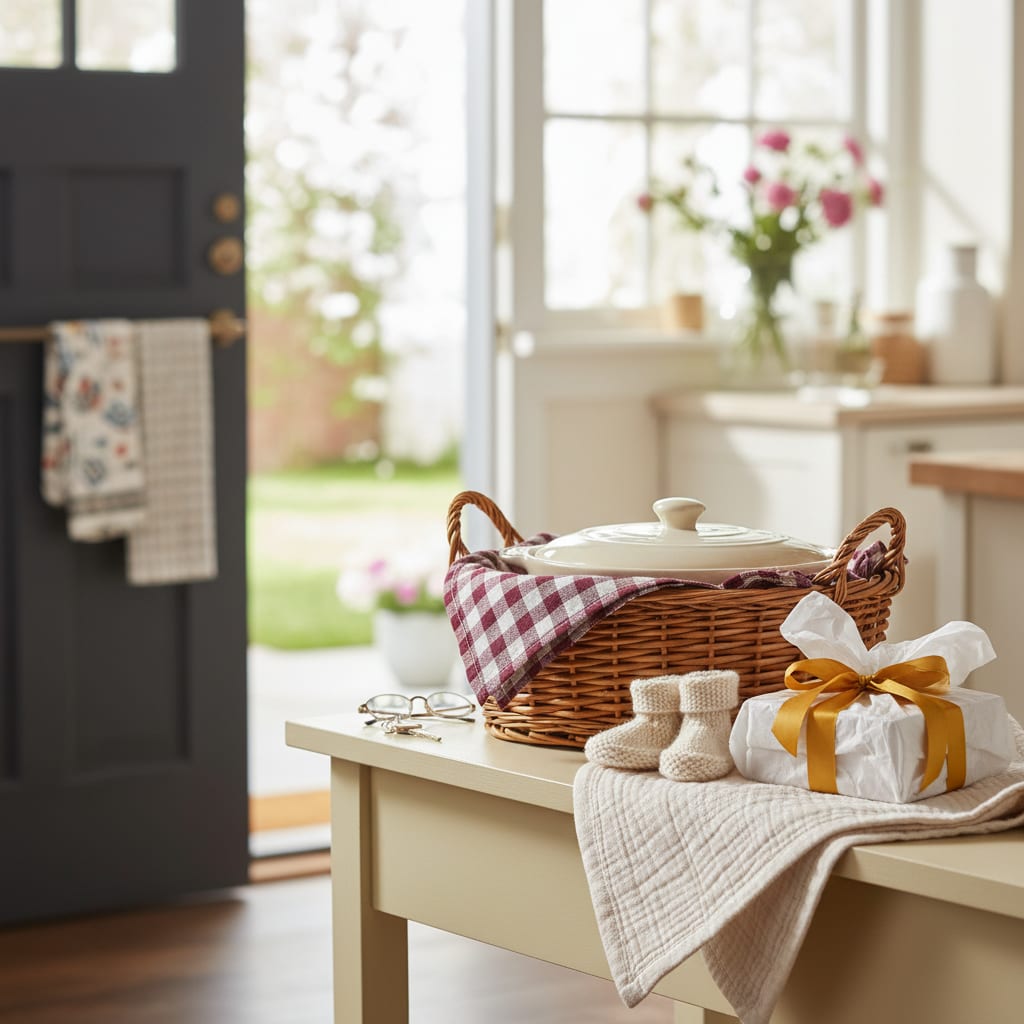
- A meal they can eat one-handed or freeze. The casserole is a cliché because it works. Soup, a lasagna, a bag of decent groceries — anything that answers “what’s for dinner” without anyone thinking.
- Something small for the new mother herself. She has been handed to the baby by every previous visitor. A treat that’s just hers lands louder than you’d expect — I keep a whole list of ideas in my postpartum gift basket guide.
- Not: flowers needing a vase, gifts needing assembly, or anything needing her to host you. If your gift creates a task, it’s a chore in wrapping paper.
- Your own health, verified. Sniffles cancel the visit, full stop. Newborn immune systems are not a debate club. And if the parents ask for updated vaccines or washed hands before holding — that’s a yes, cheerfully.
During the visit: be staff, not company
Here’s the mental trick that makes the whole thing work: you are not company. Company gets served tea. You are staff — beloved, volunteer, highly overqualified staff. Staff arrives, quietly starts a load of laundry, unloads the dishwasher, and asks “what would help most?” exactly once, then acts.
Hold the baby when offered, hand the baby back the moment mama reaches — no “we’re fine!” while she hovers. Say the sentence every new parent is starving to hear: “You two are doing a wonderful job.” Skip the sentences nobody needs: “in my day,” “are you sure,” and any commentary on feeding choices, the baby’s name, or how tired she looks. The full etiquette catalog lives in my rules for visiting a newborn — the first visit is just those rules with higher stakes.
And keep it short. Forty-five minutes to an hour is a beautiful first visit. If they beg you to stay for dinner, lovely — but let them do the begging.
After the visit: the long game
The first visit isn’t the finale; it’s the audition. Follow it with a text that asks nothing (“No need to reply — the baby is perfection and so are you two”). Offer specifics, not generalities: “I can drop dinner Thursday” beats “let me know if you need anything,” which every exhausted parent translates as please manage me.
And when the parents make choices that differ from how you did it — sleep, feeding, visitors, all of it — remember the house motto: their baby, their rules, my cookies. The science has moved since we were up at 2 a.m.; the deference is permanent. If holding your tongue turns out to be the hard part, my guide to grandparent boundaries is the companion piece, and the broader job description is in the first-time grandma guide.
The grandparents who get called first when the second baby comes are never the ones who visited longest. They’re the ones who made the first visit feel like help arriving instead of hosting duty.
FAQ: grandparents’ first visit after birth
How soon after birth should grandparents visit?
Whenever the parents invite you — that’s the only correct answer. Some families welcome grandparents on day one; others want a week or two alone first. Ask “when works best for you?” and take the answer gracefully, without negotiating.
How long should the first visit to a newborn last?
Under an hour is a safe default unless the parents ask you to stay. Short visits protect feeding schedules, naps, and the parents’ thin reserves — and leaving early is what gets you invited back sooner.
What should grandparents bring to the first visit?
A meal they can freeze or eat one-handed, something small for the new mother herself, and clean, healthy hands. Skip anything that creates work — flowers needing vases, gifts needing assembly, or an appetite for hosting.
What should grandparents not do when visiting a newborn?
Don’t show up uninvited, visit while sick, kiss the baby, hold on when a parent reaches for their child, or offer commentary on feeding, names, or parenting choices. Follow the parents’ rules on everything — including hand-washing and vaccines — without a sigh.